Vintage Clothing Ideas: A Guide to Retro Style from the 60s to Y2K
Vintage Clothing Ideas can add personality to modern clothes without making an outfit look like a costume. When exploring vintage clothing ideas, one piece from another decade can create a stylish look when paired with simple, current clothing. For example, a 1970s suede jacket, white tee, and straight jeans create an easy everyday style, while flares, a peasant blouse, and platforms offer a stronger retro look. This retro style guide explores the 60s, 70s, 80s, 90s, and Y2K decades for women and men. Learning about clothing age, reading a label, and checking the condition of a vintage find can help you distinguish authentic vintage clothing from new clothes designed in an old style.
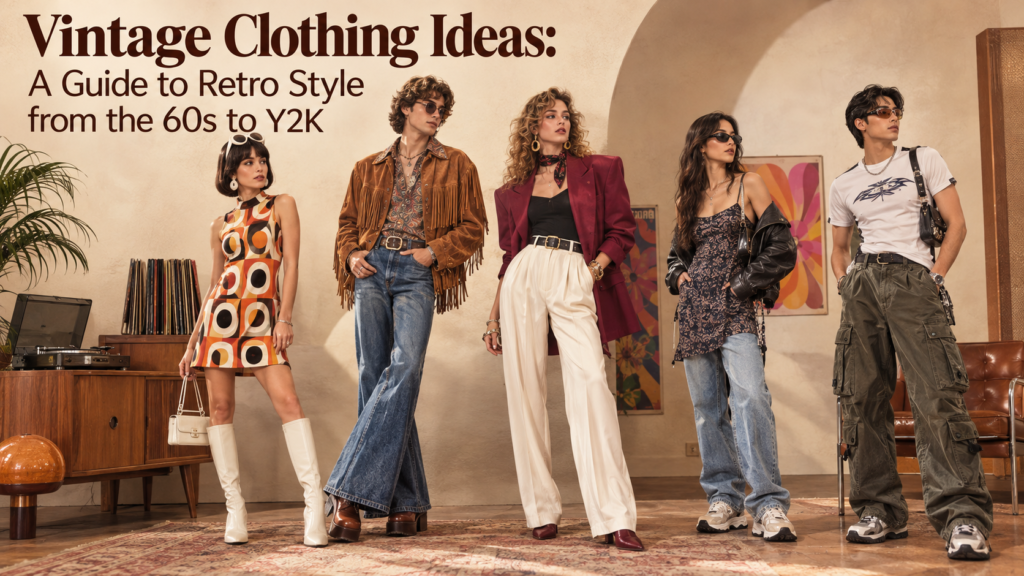
How to Mix Vintage and Modern Clothes with the One-Vintage-Piece Rule
Head-to-toe 70s clothing might suit a period film or a theme night, but everyday street style often looks more natural when an outfit features a single vintage statement piece. Contrast makes the difference: a suede fringe jacket, plain tee, and slim jeans create deliberate style, while adding bell-bottoms may make the outfit look ready for a 70s party. The same approach works with retro pieces, brand-new flares inspired by 1974, and vintage and modern clothes from different eras. For balanced vintage styling, choose a statement jacket or another vintage piece and pair it with modern clothing. One vintage piece per outfit is a helpful rule, while two vintage pieces maximum can work when they come from different decades. For example, a 70s jacket with 90s jeans creates an eclectic style without making the entire outfit look old-fashioned. This combination keeps everyday fashion current and creates a vintage outfit that feels natural rather than like a historical costume.
The Vintage-Modern Balance Table: Vintage Pieces and Modern Pairings
Vintage Piece | Modern Pairing | Why It Works |
70s suede jacket | White tee and modern jeans | Texture contrast and era contrast help the jacket stand out. |
80s oversized blazer | Fitted tank and slim trousers | Structure against a sleek base creates a clean silhouette. |
90s slip dress | Leather jacket and chunky sneakers | Soft against edge creates an interesting balance. |
Y2K mini bag | Minimalist outfit in neutrals | A pop of personality stands out against a clean canvas. |
Vintage band tee | Tailored trousers and loafers | Casual style meets a sharp look. |
70s flared jeans | Modern crop knit and clean sneakers | One retro silhouette works with current fashion. |
Vintage silk scarf | Modern blazer and jeans | A small vintage accent can make a big impact. |
These vintage pieces work because each modern pairing balances the older design without hiding its character. An 80s oversized blazer looks cleaner with a fitted tank and slim trousers, while a Y2K mini bag adds personality to a minimalist outfit in neutrals. You can also style a vintage band tee with tailored trousers and loafers for a mix of casual style and a sharp look. For a softer touch, a vintage silk scarf with a modern blazer and jeans adds a small vintage accent with a big impact.
Vintage Outfit Formulas for Every Occasion
The best vintage outfit formulas depend on the occasion, comfort, and the amount of retro style you want to show. For weekend outfits, women can wear a vintage oversized cardigan or band tee with high-waisted jeans, clean white sneakers, and a vintage belt. Men can wear a vintage flannel shirt over a fitted tee with straight-leg jeans and boots. For office outfits, women can pair a vintage structured blazer with a modern blouse or crew-neck tee, tailored trousers, loafers, and a vintage brooch. Men can combine vintage wool trousers with a modern button-down, leather belt, and dress shoes. For date night, women can style a vintage silk blouse with high-waisted black trousers, heeled boots, and minimal jewelry, while men can pair a vintage blazer with dark jeans, leather shoes, and a vintage watch.
Occasion | Women | Men |
Weekend | Vintage oversized cardigan or band tee, high-waisted jeans, clean white sneakers, vintage belt | Vintage flannel shirt, fitted tee, straight-leg jeans, boots |
Office | Vintage structured blazer, modern blouse or crew-neck tee, tailored trousers, loafers, vintage brooch | Vintage wool trousers, modern button-down, leather belt, dress shoes |
Date night | Vintage silk blouse, high-waisted black trousers, heeled boots, minimal jewelry | Vintage blazer, dark jeans, leather shoes, vintage watch |
Festival or concert | Vintage crochet top, denim shorts, cowboy boots or ankle boots, layered vintage jewelry | Vintage graphic tee, cargo pants, sneakers, vintage sunglasses |
For a festival or concert, women can combine a vintage crochet top, denim shorts, cowboy boots or ankle boots, and layered vintage jewelry. Men can wear a vintage graphic tee, cargo pants, sneakers, and vintage sunglasses for a relaxed retro look. These combinations show how a vintage statement piece can refresh an everyday casual wardrobe without requiring an entirely vintage outfit. Whether you need outfit inspiration for the weekend, want to style an office blazer, or are exploring different clothing categories, thoughtful fashion accents can connect retro influences with modern trends.
Vintage Style by Decade: A Guide to What to Hunt For from the 60s to Y2K
Vintage Clothing Ideas become easier to explore when you know which pieces suit your wardrobe and how to recognize genuine vintage clothing. Although there is no single legal definition used by every seller, many vintage sellers follow the 20-year rule. For example, Etsy’s vintage category has required items to be at least 20 years old, while items more than 100 years old are generally classified as antiques. Retro clothing is different because it is newly made using an older style. This means you can create a retro look with clothes from a modern mall store without owning genuine vintage pieces. When shopping for secondhand clothing, consider the quality, fit, fabric, and usefulness of each garment rather than buying something only because it belongs to a particular decade.
Each decade has its own recognizable shapes, materials, and accessories. The 60s introduced clean mod lines, the 70s brought relaxed silhouettes and earth tones, the 80s became known for bold outerwear, and the 90s popularized minimalist basics and grunge. Y2K fashion added playful accessories and distinctive early-2000s designs. Understanding these clothing eras helps you choose vintage garments that work with contemporary fashion. You can also explore a separate outfit guide for each decade when you want to build a complete look.
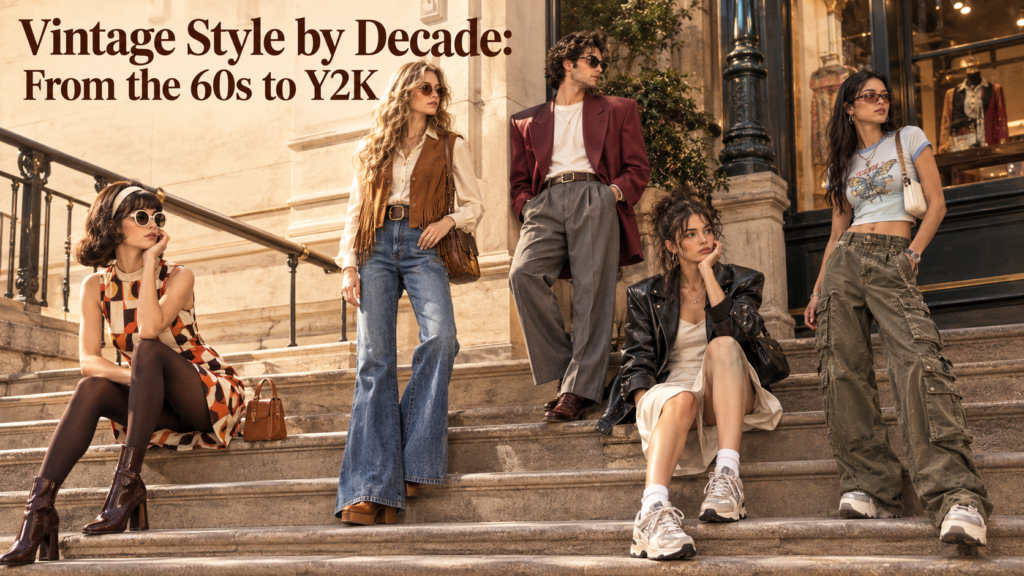
1960s Fashion: How to Choose Shift Dresses and Clean Mod Lines
Early 1960s fashion often featured ladylike designs, including boxy skirt suits, sheath dresses, and pillbox hats. During the second half of the decade, mod fashion became more prominent, bringing A-line minis, color blocking, and knee boots into everyday style. When looking for 1960s vintage finds, an A-line shift dress or a skinny-rib turtleneck is a practical choice because both can fit easily into a modern wardrobe. These pieces retain their retro silhouettes without requiring an entirely period-inspired outfit.
For an easy everyday combination, wear an A-line shift dress with opaque tights and loafers or ankle boots instead of choosing go-go boots for a head-to-toe vintage appearance. You can also pair a skinny-rib turtleneck with modern trousers or a skirt for a cleaner finish. These combinations make 60s outfit ideas wearable today while keeping the original mod influence visible.
1970s Fashion: Why This Is One of the Most Wearable Vintage Decades
The 1970s remain one of the easiest vintage decades to incorporate into current fashion because earth tones, suede, and relaxed shapes continue to work well with modern clothing. Look for suede jackets and vests, wrap dresses, high-waisted flared jeans, and chunky knits in rust, mustard, olive, and cream. Designer Diane von Furstenberg introduced her famous wrap dress in 1974, and original examples are sought after by vintage fashion enthusiasts. When shopping secondhand, check the fabric, construction, and condition before deciding whether a piece deserves a place in your wardrobe.
One simple outfit combines a vintage suede vest with a white button-down, straight-leg jeans, and ankle boots. This pairing keeps the 70s influence visible without making the entire outfit look dated. Earth-tone accessories and chunky knitwear can also add retro character to everyday clothing. If you want more variety, explore other 70s outfit ideas featuring flared denim, suede outerwear, and relaxed vintage styling.
1980s Fashion: How to Find Blazers, Leather and Outerwear
1980s fashion is often easiest to wear when you choose one statement piece rather than combining every recognizable trend. Look for a double-breasted blazer with padded shoulders, a bomber jacket, a moto leather jacket, pleated high-waisted wool trousers, or large gold-tone earrings. These pieces reflect the decade’s bold approach to tailoring and accessories while offering enough versatility for contemporary outfits. Check the fit and condition of vintage outerwear, particularly around the shoulders, lining, buttons, and seams.
For a balanced everyday look, wear an oversized or double-breasted blazer over a fitted tank with slim trousers and minimalist sneakers. This pairing allows the shoulders to remain the main feature without making the entire outfit feel too dramatic. A moto leather jacket can also work with simple jeans and a plain top. For more expressive styling, 80s outfit ideas can include stronger colors, statement jewelry, and party-inspired combinations.
1990s Fashion: How to Wear Minimalist Vintage Basics
The 1990s are especially useful for people who want vintage clothing that already looks modern. Thrift racks often contain bias-cut slip dresses, straight-leg jeans, mom jeans, ribbed tanks, and boxy leather blazers. These minimalist basics are easy to combine with current clothing because their simple shapes do not depend on elaborate styling. When selecting secondhand pieces, look for comfortable fabrics, useful colors, and cuts that suit your everyday wardrobe.
A 90s slip dress worn under a leather jacket with chunky sneakers creates a relaxed combination that can look contemporary rather than obviously vintage. Straight-leg or mom jeans can be paired with a ribbed tank, while a boxy leather blazer works with a simple top and modern footwear. These combinations make 90s outfit ideas practical for daily wear while preserving the decade’s understated style.
Grunge Fashion: How to Recreate the Early-90s Thrift-Store Look
Grunge fashion grew around the casual, layered clothing associated with early-1990s alternative music culture, and thrift stores were an important source of its style. Typical pieces include flannel shirts worn open, faded band tees, ripped jeans, oversized cardigans, and combat boots. These garments work well together because they emphasize comfort, relaxed proportions, and a slightly worn appearance rather than polished matching outfits. When shopping for grunge clothing, prioritize soft fabrics, practical layers, and pieces that can be worn in different combinations.
A vintage flannel shirt is one of the easiest items to find because loose-fitting examples are common in secondhand shops. Wear one open over a plain tee with straight jeans and boots, or layer it over a slip dress for a different interpretation of the same style. Faded band tees, oversized cardigans, and distressed denim can add more character without requiring an entirely vintage wardrobe. For additional combinations, grunge outfit ideas can help you build a casual, alternative look with thrift-store clothing.
Y2K Fashion: How to Wear the Newest Era Considered Vintage
Late-1990s and early-2000s clothing has entered the vintage category under the 20-year threshold used by many sellers. Recognizable Y2K fashion pieces include baguette bags, low-rise denim, mesh tops, velour tracksuits, butterfly clips, and logo-heavy tees. These designs often feature playful details and distinctive silhouettes, making them useful for adding a nostalgic touch to contemporary outfits. When buying vintage Y2K garments, check the condition of stretch fabrics, printed logos, bag straps, and decorative details.
For an everyday look, try a logo tee with high-waisted wide-leg jeans and platform sneakers, or style a small baguette or mini bag with an outfit in neutral colors. Wearing one recognizable Y2K accessory at a time can make the outfit feel current without overwhelming it with early-2000s details. These combinations offer an accessible way to explore Y2K outfit ideas while mixing vintage accessories with modern clothing.
How to Identify Vintage Clothing Age by Reading Its Tags
Clothing labels can help you estimate when a garment was made, although a label rarely reveals an exact year. In the United States, federal textile and care-labeling rules introduced requirements at different times, giving collectors useful clues about a garment’s earliest possible date. However, a missing label does not automatically prove that a piece is old, and a company may continue using an identification number for many years. Comparing two or three clues, such as the label, garment construction, fabric, and zipper, usually gives a more reliable estimate than relying on one detail.
These dating clues mainly apply to clothing made or sold in the United States. UK and European labels followed different rules, so their dating methods may differ. When checking vintage clothing, use the tag as a starting point and compare it with the garment’s cut, materials, and construction. This approach can help you distinguish a likely vintage garment from a modern reproduction made to look older.
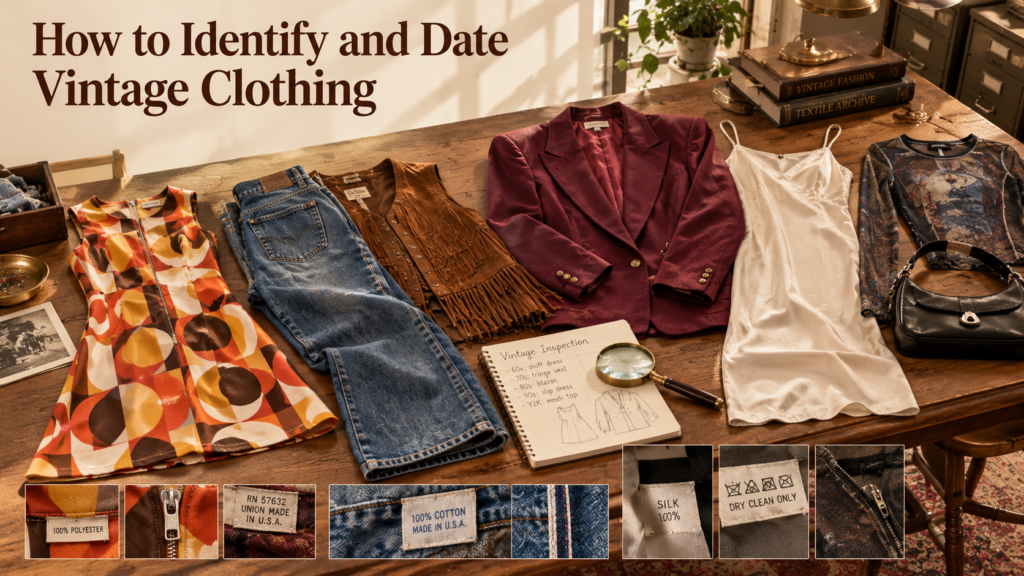
How to Understand RN and WPL Numbers on Vintage Labels
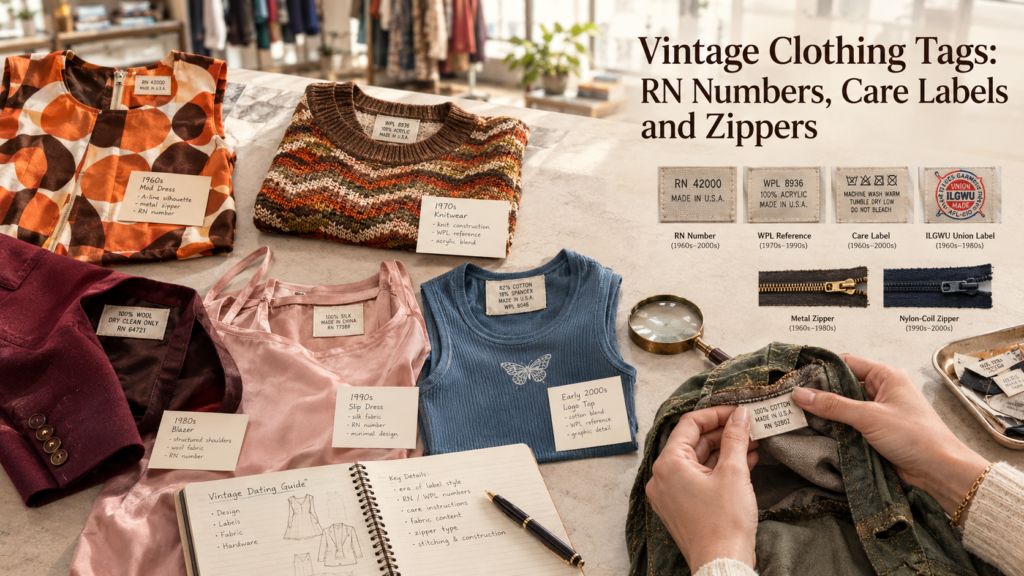
An RN, or Registered Identification Number, is issued by the Federal Trade Commission (FTC) to eligible US businesses that manufacture, import, or sell textile products. The FTC’s textile labeling guide provides information about its RN database, which can help you identify the company associated with a number. Collectors generally treat RN numbers of 13670 or higher as indicating registration under the numbering system that began in 1959. However, an RN tells you when a company registered, not when a particular garment was manufactured, so it provides an earliest possible clue rather than an exact production date.
A WPL number is associated with the older Wool Products Labeling system and may appear on wool garments. The FTC no longer issues new WPL numbers, but companies that already hold them may continue using them. Finding a WPL number can therefore point toward a company with an older registration history, but it does not prove that the coat or other wool garment itself is old. Check the number alongside the garment’s design, fabric, seams, and other labels before estimating its age.
How Care Labels, Fiber Content, Union Labels and Zippers Help Date Vintage Clothing
Different US labeling requirements can help narrow down a garment’s likely age. The table below summarizes common clues, the dates they may suggest, and the limitations to consider when examining vintage clothing
Clue on a US Garment | What It May Suggest | The Limitation |
No fiber content label | Possibly made before 1960, when the Textile Fiber Products Identification Act came into force | Wool had its own labeling law from 1939, and labels may have been removed. |
No care instructions anywhere | Possibly made before 1972, when the FTC Care Labeling Rule took effect | Care labels are sometimes cut out because they irritate the skin. |
Care symbols without written instructions | July 1997 or later, when the FTC first permitted symbols instead of words | Written care instructions are still legal, so words alone do not establish a garment’s age. |
US-made garment without a country-of-origin label | Possibly made before the mid-1980s | Country-of-origin marking has been required since 1984, while imported garments often carried a “Made in” label. |
ILGWU union label | Often associated with clothing made before approximately 1995, when the women’s garment union merged into UNITE | An AFL-CIO marking indicates 1955 or later, but other construction clues are still needed. |
Nylon coil zipper | Possibly from the 1960s or later | Talon advertised its nylon Zephyr zipper as new in 1960, although some designer garments used nylon zippers earlier. |
Metal zipper in a dress’s side seam | Common in garments from the 1930s through the 1950s | Metal zippers never disappeared and are still used in some jeans and other clothing. |
Union labels can be especially useful because their designs changed over time. The International Ladies’ Garment Workers’ Union (ILGWU) label dates back to 1900, although many manufacturers began sewing it into garments during the 1930s. Its red, white, and blue version is associated with the period from 1974 to 1995. The Vintage Fashion Guild’s union label chart provides photographs of different versions, making it easier to compare a label while shopping secondhand. Other physical details can support the estimate, too: a vintage clothing flat lay might include a suede vest, cable-knit sweater, straight-leg jeans, silk scarf, and cotton dress with a metal side zipper. Examining these details together is more reliable than using a single label to assign an exact year.
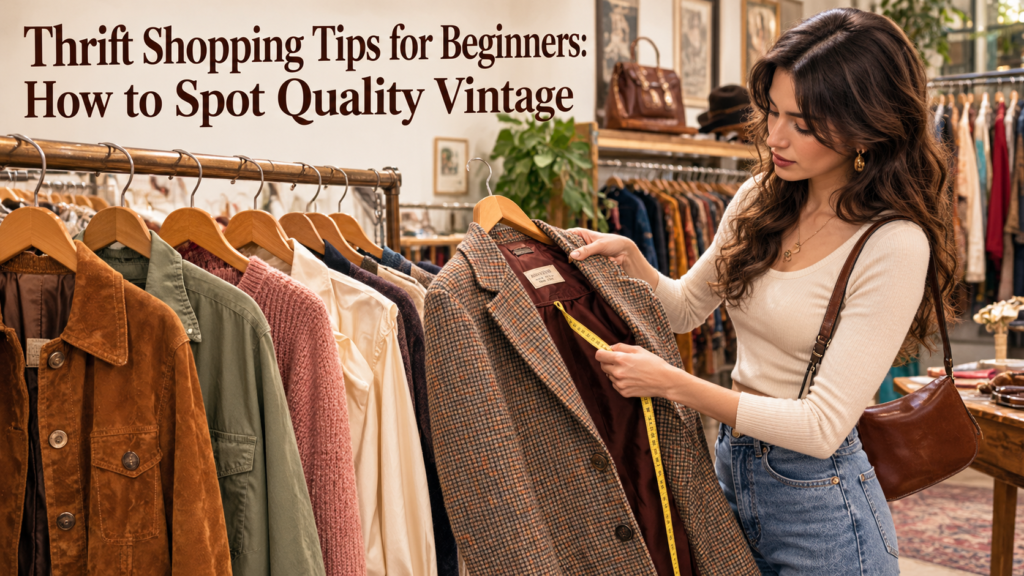
Thrift Shopping Tips for Beginners: How to Find Quality Vintage Clothing
Thrift shopping without a clear plan can leave you with a bag full of inexpensive items that never become part of your everyday wardrobe. Spending a little time preparing at home can make your shopping trip more productive than spending extra hours searching through store racks.
Begin by identifying the gaps in your closet. Check what you already own and write down what you need, whether it is a well-fitting blazer, a suede jacket, or clothing in a particular color. Having specific goals helps you avoid buying items simply because they look appealing. Reviewing your capsule wardrobe can also help you identify the pieces that would create the most new outfits with your existing clothes.
Next, focus on measurements instead of relying on size numbers. Clothing sizes have changed over the decades, which means a vintage size 10 may fit very differently from a modern size 10. Carry a tape measure and know your bust, waist, hip, and inseam measurements before you shop. Wear clothing that is easy to change out of, such as a fitted tank top and leggings, so you can try on potential purchases quickly, even when fitting rooms are busy.
Check the Fabric Label First to Judge Clothing Quality
Reading the fabric composition label is one of the quickest ways to evaluate a garment’s quality. Before buying something because you like its print or design, check what material it contains.
Fabric | What It Can Indicate | Is It Worth Buying? |
100% wool | Durable material and quality construction | Almost always yes |
100% silk | A luxurious garment with lasting potential | Yes, provided there are no stains |
100% heavy cotton | Durable fabric often associated with workwear | Yes |
Cotton-polyester blend | Often associated with mass production and potentially lower durability | Only when the design is exceptional |
100% polyester | Common in 1970s dresses and fast-fashion clothing | Only when the print or cut is special |
Cashmere or a cashmere blend | A potentially valuable secondhand find | Yes, after checking for pilling and moth holes |
After examining the fabric, inspect the garment’s construction. These details can help you decide whether a piece is worth the price.
- Seams: Look for neatly finished edges instead of raw or fraying fabric. French seams can be a positive sign of careful construction.
- Buttons: Horn, shell, or metal buttons may indicate better-quality construction than ordinary plastic buttons.
- Zippers: Open and close the zipper completely before purchasing the garment. A zipper can provide clues about a garment’s age, but its condition should also influence your decision.
- Lining: A fully lined jacket or skirt often began as a better-quality garment, although the overall construction still needs to be checked.
Choose the Right Time and Place for Thrift Shopping
Many thrift stores add new items to their racks daily. Ask employees when their store normally restocks and plan your visit around that schedule. Shops in wealthier neighborhoods may receive more donations made from natural fibers or designer clothing. Some thrift chains also offer rotating discounts based on clothing tag colors, so check which color is discounted before filling your shopping cart.
Buying secondhand also allows you to find clothing without requiring new garments to be manufactured for your outfit. According to ThredUp’s 2025 Resale Report, the US secondhand apparel market grew by 14% in 2024, five times faster than the broader retail clothing market. The report also projects that the global secondhand apparel market will reach $367 billion by 2029.
The same approach can be useful when shopping for eco-friendly kids’ clothes. Children often outgrow their clothing before the garments become worn out, making secondhand purchases a practical way to reuse items that still have plenty of life left in them.
Five Essential Vintage Wardrobe Pieces to Buy First
You do not need an entire closet filled with vintage clothing to create a vintage-inspired style. Starting with five carefully selected pieces and combining them with your existing wardrobe can give you plenty of outfit options.
- A leather or denim jacket. A vintage jacket is one of the most versatile purchases because you can wear it over dresses, T-shirts, blouses, and sweaters throughout the year. A worn-in 1980s moto jacket or a heavy-denim 1990s trucker jacket has a distinctive character that newer jackets can take years to develop.
- A wool or cashmere sweater. Older knitwear is often made with heavier yarn than many modern alternatives. A 1970s cable-knit fisherman sweater or a 1990s cashmere crew-neck adds texture and interest without making an outfit look overly complicated.
- High-waisted trousers or jeans. A pair of 1990s Levi’s 501 jeans or 1980s pleated wool trousers can serve as the foundation for many different outfits. Both styles can work with a wide range of tops already in your wardrobe.
- A structured blazer. Blazers from the 1980s and early 1990s often feature details that are less common in affordable clothing today, including full linings, genuine horn buttons, and padded shoulders. A well-chosen blazer can work for office wear, casual weekends, and evening outings.
- A silk scarf or another vintage accessory. Accessories are a low-risk starting point because they do not require the same fit considerations as clothing. A printed silk scarf can be worn around your neck, in your hair, attached to a bag, or used as a belt. Vintage brooches, belt buckles, and sunglasses can also give a modern outfit more character.
If you want to preview how a thrifted jacket might look with your own jeans and shoes before buying it, Klodsy can place the item on your photo and help build outfit combinations using clothing already in your closet.
Vintage Styling Mistakes That Can Make Your Outfit Look Like a Costume
- Wearing an entire decade at once. Try using one vintage item in an outfit or combining two pieces from different eras. Even authentic vintage clothing can look like a costume when every item comes from the same decade.
- Overlooking the fit. Clothing that hangs awkwardly is less likely to become a regular part of your wardrobe. Consider budgeting for a tailor when you find an important piece. Shortening a hem, adjusting a blazer’s waist, or reducing sleeve length can turn an almost-right garment into a much better fit.
- Purchasing damage that cannot be repaired. Small stains, loose buttons, and open seams may be fixable. However, moth holes in wool, permanent discoloration, and fabric that tears when gently pulled are usually much harder to repair.
- Collecting clothes without choosing versatile pieces. Before buying anything, consider whether it will work with at least five items you already own. If you cannot create several combinations with it, leaving it on the rack may be the better decision.
- Forgetting about proportions. Vintage silhouettes can feature extremely wide legs, oversized shoulders, or very small waists. Balance these shapes with modern clothing. For example, wear wide vintage trousers with a fitted top, or combine an oversized vintage blazer with slim-fitting bottoms.
- Leaving accessories out of the outfit. Scarves, belts, jewelry, sunglasses, and bags can refresh modern clothing without requiring an exact size match. They are often less expensive than full garments and can quickly add vintage character to a simple outfit.
Frequently Asked Questions
How many years old must clothing be to qualify as vintage?
There is no official legal age limit, but many sellers consider clothing vintage once it reaches 20 years old. For instance, Etsy allows items that are at least 20 years old in its vintage category, while clothing and other items that are 100 years old or more are generally classified as antiques.
What is the difference between vintage clothes and retro clothing?
Vintage clothing was originally produced during the historical period it represents. Retro clothing, however, is made more recently but takes inspiration from an earlier decade. For example, newly manufactured flared jeans are retro, whereas a pair made in 1974 is vintage.
What does RN stand for on a clothing label?
RN means Registered Identification Number, which is assigned by the US Federal Trade Commission to businesses that manufacture, import, or sell textile products. This number helps identify the company associated with the clothing rather than showing the year the garment was produced.
What signs can help you identify a vintage clothing tag?
Check for an ILGWU union label, a WPL number, or a garment made in the US without care instructions or a country-of-origin label. These details can indicate that the clothing is older. Finding two or more of these signs together provides stronger evidence than relying on just one clue.
How can you wear vintage clothing with a modern style?
Choose a single vintage item for your outfit and combine it with contemporary clothing. For example, pairing a 1970s suede jacket with a white T-shirt and straight-leg jeans creates a balanced, modern look. Wearing that same jacket with flared jeans and platform shoes can make the outfit feel more like a period costume.
Is vintage fashion still trendy today?
Yes, vintage fashion remains popular. According to ThredUp’s 2025 Resale Report, the US secondhand clothing market expanded by 14% in 2024, growing five times faster than the overall retail clothing market.
Stay connected with Cyiana for more fashion inspiration, beauty ideas, skincare tips, makeup looks, and the latest trends. If you enjoyed this article, follow us on YouTube for helpful videos, TikTok for quick style and beauty inspiration, and Reddit for conversations and community discussions. You can also explore more fashion trends, outfit ideas, seasonal styling guides, beauty advice, and product reviews across Cyiana. Whether you are updating your wardrobe, discovering a new beauty routine, or simply looking for fresh inspiration, our social channels make it easy to keep up with new ideas and helpful content from Cyiana wherever you enjoy browsing.
Pingback: Tea Party Outfit Ideas: 15 Classy and Stylish Looks