5 Medium Length Haircuts for Thick Hair: Stylist Picks 2026
Find the Right Medium-Length Cut for Your Thick Hair
For thick hair, medium-length haircuts are often the sweet spot because medium length keeps enough hair weight to control puffing out while staying short enough for easier styling. From my experience of over a decade cutting dense hair, I have seen many thick-haired clients sit in my chair every week with thick heavy hair that feels heavy by the afternoon or seems to be dragging down their whole look. The problem is not always difficult hair, and going short is rarely the only fix. The right haircut can stop hair from puffing out at the sides or forming a triangle shape at the bottom when it triangles out, creating unwanted bulk and poof.
These 11 stylist picks for 2026 focus on medium-length cuts that work with natural density instead of fighting it. The key is choosing the right layers, using careful internal thinning, and placing weight removal in the right places so the stylist takes the weight out without losing the right hair length. Each style suits different needs, and knowing the exact words to use during your appointment can make the difference between the wanted cut and the cut you got. Instead of relying only on galleries, speak with your stylist about how the cut works with density and where the weight should come out.
Why Medium-Length Is the Sweet Spot for Thick Hair
Medium length is my favorite length for thick hair because it creates a sweet spot between hair that is too short and hair that is too long. Thick hair needs enough weight to hold itself down and stay smooth. Cutting it too short removes the weight that was keeping it in check, which can lead to puffing up, puffing out, and unwanted poof. On the other hand, too much length allows density to pile up and feel heavy. Medium length gives you enough weight and enough length to style your hair in different ways without taking forever to style.
When working with thick-haired clients in the chair, there are three main ways I focus on reducing bulk and controlling where the weight comes out:
- Long layers: Long layers keep your length while adding shape and movement, preventing thick hair from looking like one heavy block.
- Internal layering: Internal layering removes bulk from the inside and under the surface, helping the outline stay full while allowing the hair to sit flatter.
- Manual thinning: Manual thinning removes bulk by hand exactly where it is needed. This gives better control than thinning shears, which can sometimes leave little bits that stick out as the hair starts to grow.
I also steer thick-haired clients away from a really choppy cut. Thick hair already has so much hair that it can poof on its own, and making it too choppy on top can become hard to manage and make the hair difficult to lie smooth.
What Thick Hair Actually Needs: Layered or One Length?
Almost always, thick hair benefits from some layering. That is my honest answer after working with different hair types. My go-to choice is layers because they remove extra weight and help the hair sit nicer. If someone really doesn’t want layers, I would still work around the very bottom to remove bulk from the ends and create a more balanced shape.
Thick hair can go fully one length, but it usually needs to be thinned out from the inside first. With all that density, hair left truly one length can become bulky and triangles out as it grows. Even a blunt, one-length look often needs quiet thinning hiding underneath to keep the shape controlled. Face shape also matters when choosing between these 11 cuts. A round face can benefit from height up top and length that falls past the jaw, while a longer face often needs more width, softness, and shape around the sides. A free Haircut Guide can help you understand which style flatters your shape so you can walk in knowing exactly what to ask for.
Not sure where you land? Start here:
- Feels heavy and bulky all over → Long layers or a U-cut
- Poofs or triangles at the bottom → Internal layering
- Thick and wavy and frizzy → Internal layering plus a smoothing product
- Thick and curly → Layers cut a little shorter in the back
- Want the least effort possible → Long layers, no bangs or a long curtain bang
- Want it sleek and minimal → A one-length blunt lob with internal thinning
Long Layers with a Collarbone Layered Lob
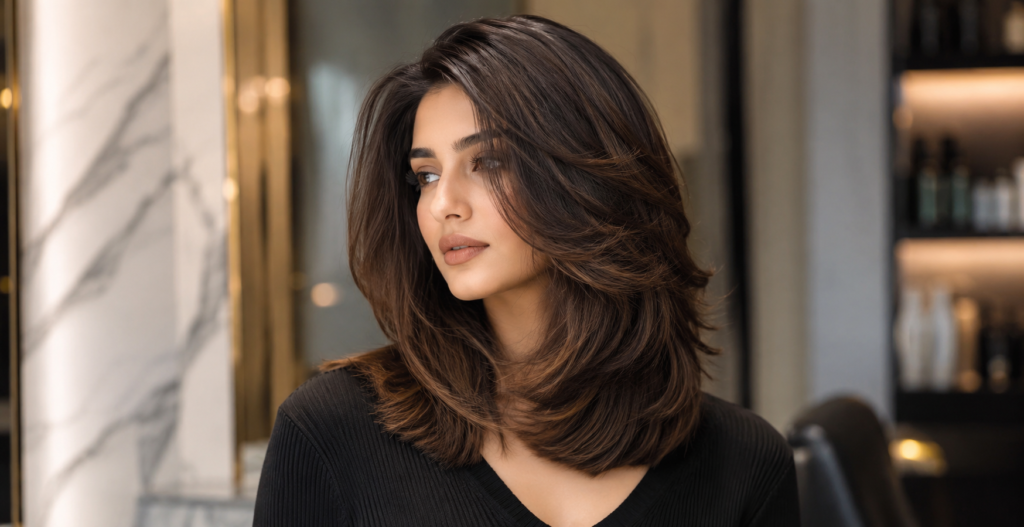
The layered lob is a collarbone long bob that sits right around the collarbone and uses long layers cut through the inside to manage thick hair. It keeps a strong, almost blunt outline at the bottom while internal layers pull weight out, helping the shape avoid looking like a heavy block. From the front, the hair looks full and polished, while the back shows more movement through the ends. In my experience, this is one of the true workhorse thick-hair cuts because it gives you a polished shape and grows out without becoming awkward.
Best Suited For: Thick, straight-to-wavy hair that feels heavy at the very bottom and wants the length gone only slightly. This style works well if you like your hair to look done, do not mind running a brush through it in the morning, and want more shape without making a big commitment.
What to Ask Your Stylist:
Length: Collarbone length, with a strong perimeter
Layers: Long internal layers, kept blended and not stacked
Finish: Point-cut ends for a softer bottom line
Bangs (Optional): Long face-framing pieces if you want them
Pro Tip
On damp hair, clip the bottom half up and out of the way, then take a 2-inch piece at a time. Place the Olivia Garden Ceramic+Ion Speed XL 2⅛” Round Brush underneath at the roots and roll slowly down the section while following right behind with your dryer. When you reach the ends, roll the brush under and hold it for a few seconds so the tip bends in naturally.
Continue working up the head section by section until all of your thick hair is styled. The big barrel helps you work through thick hair fast while creating a smooth, bouncy finish instead of leaving the hair completely stick-straight.
Long Layers for a Shoulder-Length Cut
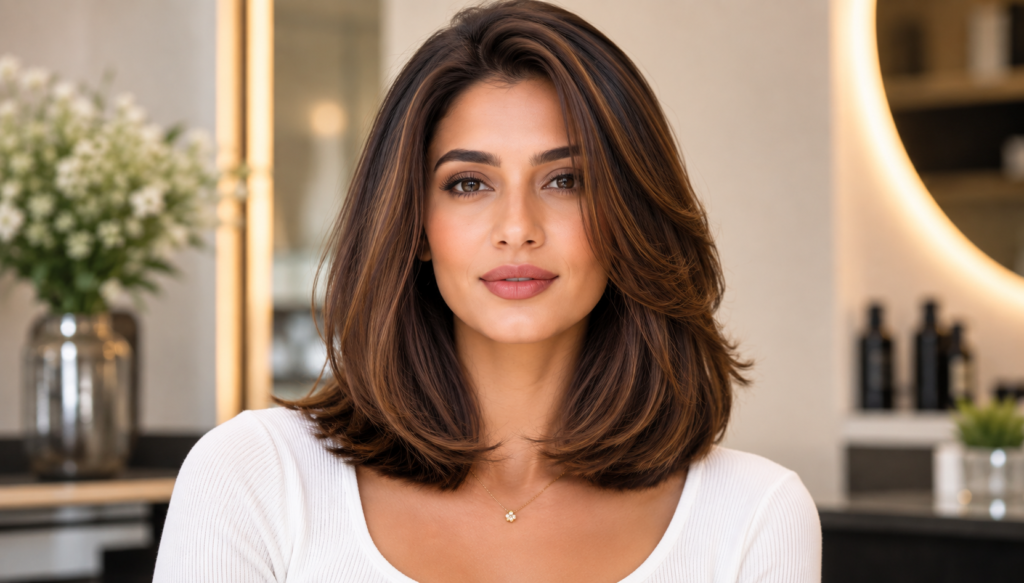
This shoulder-length cut uses long layers placed deep inside the hair, so you may not clearly see the layers themselves, but you will notice the movement they create. Your length does not change much, yet the hair stops sitting like one flat curtain. It is the perfect “keep my length, just take the weight out” cut and, in my experience, this is the shape almost everyone is asking for right now.
Best Suited For: Thick hair that wants to stay on the longer side while keeping the look low-commitment. It suits you if you mostly air-dry or prefer a quick blow-dry and want more body and movement without booking a dramatic change.
What to Ask Your Stylist:
Length: At the shoulder, kept long
Layers: Long, hidden internal layers for movement
Finish: Soft, blended ends
Bangs (Optional): A long curtain bang that blends in nicely
Pro Tip
On dry hair, mist a heat protectant through first from your maintenance section. Take a 1-inch section and clamp the ghd Curve Soft Curl 1.25″ about halfway down. Wind the hair away from your face and hold for 8 to 10 seconds. Then drop the curl into your hand and let it cool for a moment before you let go.
Alternate the direction on each section, with one section moving toward your face and the next away. This simple technique helps the finished style read as soft waves instead of tight ringlets.
The Feathered Butterfly Cut
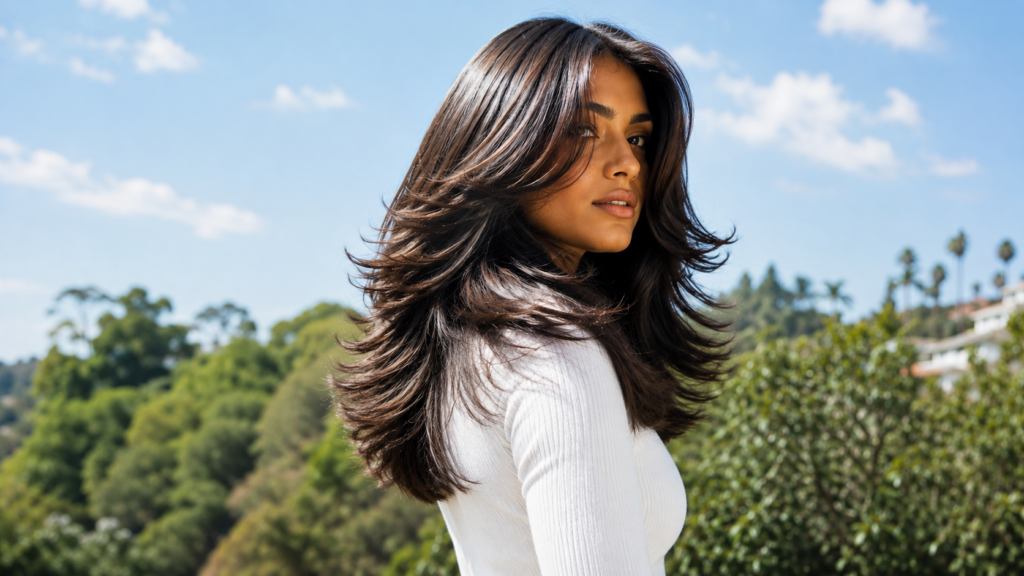
The butterfly cut is built with heavy layers that are cut short around the front and back while keeping more length underneath. When styled feathered back and away from your face, these layers create an airy, flipped-out shape with plenty of movement. This cut uses a lot of layering, which is exactly why it works so well on thick hair. The natural density helps hold the shape up and gives the style its signature volume. It is usually worn with a middle part, and the symmetry created by both sides is an important part of what makes the style look like a butterfly.
Best Suited For: Thick, dense hair that wants dramatic movement and a big, voluminous blowout. This style is ideal if you enjoy a styled look, regularly wear a middle part, and do not mind spending a few minutes creating a feathered finish.
What to Ask Your Stylist:
Length: Kept long underneath, with much shorter layers up top
Layers: Heavy face-framing and crown layers, feathered for movement
Finish: Feathered, flippy ends
Bangs (Optional): A curtain bang blended naturally into the front layers
Pro Tip
On dry hair, start with the shorter front layers. Place the Hairitage Heated Curl Brush 1.5″ underneath a front section, then roll it up and back, away from your face, and hold for a few seconds. The heat sets the flip in a single pass, so there is no separate curling iron needed.
Repeat the same technique on the other side so both sides feather back evenly. Finally, run your fingers through the hair to soften it and create a more natural finish.
The Textured Modern Shag
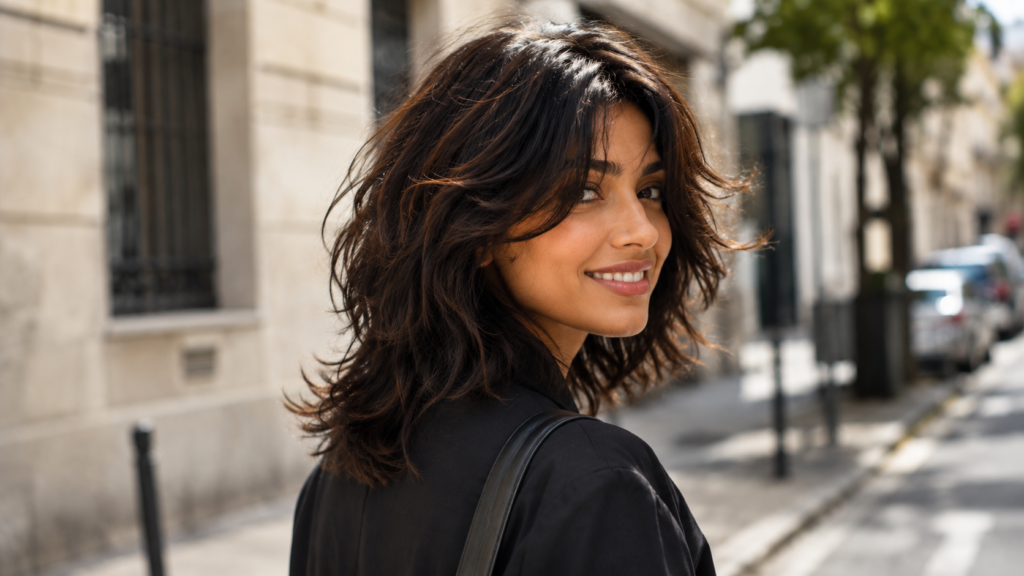
The modern shag is a piecey, textured haircut with short layers running all the way through and tapered, wispy ends. On thick hair, the main point is to thin the bulk out of the bottom so the weight lifts off the ends. The real trick is keeping everything blended enough that the style still looks intentional. When cutting a shag on really dense hair, the focus should be on taking weight off the bottom while keeping the layers connected, so the whole cut looks like a real, finished style instead of becoming overly choppy.
Best Suited For: Thick hair, especially hair with some natural wave, that wants an edgy, lived-in texture and does not mind using a bit of product. This is not the best choice if you prefer a smooth and polished look because a shag is designed to look naturally undone.
What to Ask Your Stylist:
Length: Mid-length, with layers throughout
Layers: Short, piecey layers, kept blended and not choppy
Finish: Tapered, thinned ends to lift the weight
Bangs (Optional): Curtain bangs or a wispy fringe
Pro Tip
On dry hair, tip your head down and spray IGK Beach Club Texture Spray through your mid-lengths and ends from about eight inches away. Flip your hair back up, then pinch small pieces between your fingers and twist them so the layers separate out naturally.
Do not brush the hair through afterward. Brushing pulls all the pieces back together and you can lose the textured, separated finish you were going for.
The Blended Wolf Cut
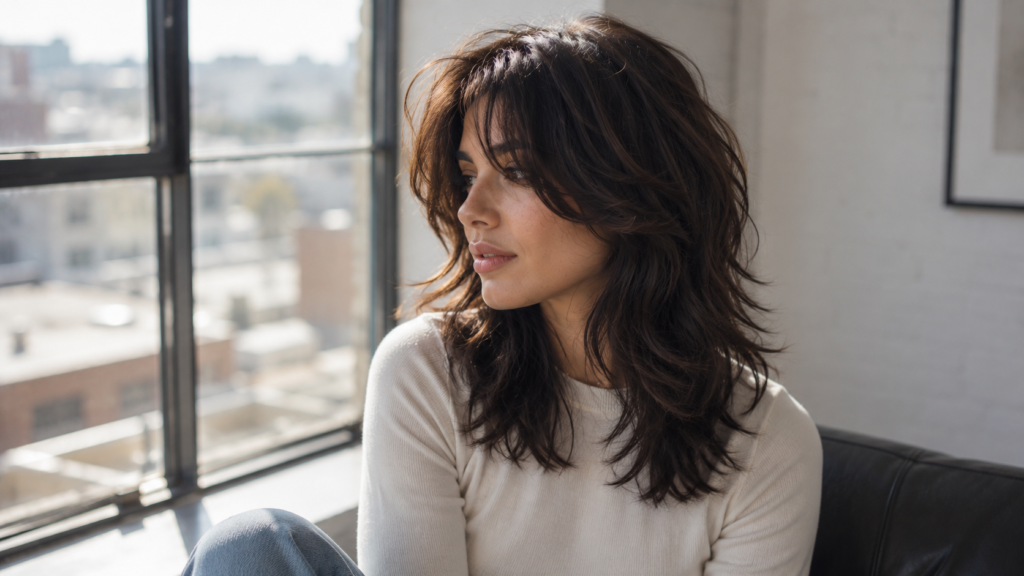
Think of the wolf cut as the shag’s more blended cousin. It follows the same layered and textured idea, but the overall result is softer and less piecey. Instead of a heavily choppy look, this style creates a fuller shape through the crown with less of a tapered finish. The layers still pull weight out of thick hair, but they do it in a way that feels more grown-up, easier to live with, and softer than a full shag.
Best Suited For: Thick hair that likes the volume and movement of a shag but wants a softer, less choppy result. This style suits you if you want texture without going fully edgy and prefer a shape that is more forgiving as it grows out.
What to Ask Your Stylist:
Length: Mid-length, fuller through the crown
Layers: Blended layers from crown to mid-length, softer than a shag
Finish: Soft, blended ends, not heavily tapered
Bangs (Optional): Curtain bangs that suit the shape
Pro Tip
On soaking-wet hair, work a coin-size amount of Matrix A Curl Can Dream Leave-In Cream through your mid-lengths to ends, raking it in with your fingers. Then rough-dry without a brush. Simply scrunch your hair up toward your scalp with your hands while the dryer runs on medium heat.
Stop when your hair is about 90 percent dry and let the last bit finish in the air. This helps keep the texture defined instead of making the hair look fluffy.
Pingback: 6 Natural Short Low-Maintenance Haircuts for Black Women
Pingback: Natural Short Haircuts for Black Women: 6 Low Maintenance Styles