35 Best Korean Hairstyles for Men to Try in 2026
How to Choose the Best Korean Hairstyle for Your Face Shape?
Korean Hairstyles for Men: Choosing the right Korean hairstyle starts with understanding your face shape. Not every Korean haircut suits every face, so it is important to find a Korean cut that balances your features and works with your natural appearance. There are seven face shapes to consider when selecting the best styles. The right haircut can sharpen features, add balance, and create a more attractive look. For example, a round face often looks better with height on top and tighter sides, while square jaws can look softer with soft waves and a layered fringe. An oblong face usually benefits from a horizontal fringe that breaks the forehead line. The table below will help you compare different face shapes with suitable Korean hairstyles and styles to avoid.
Face Shape | Best Korean Styles | What to Avoid |
Oval Face | Two Block, Curtain Hairstyle, Middle Part, Dandy Cut | Nothing specific. Oval faces suit almost every Korean cut, so you can experiment with different lengths and styles. |
Round Face | Two Block, Comma Hair, Textured Fringe, Taper Fade, Side Swept Fringe | Bowl Cut and Flat Fringe can make a wider face look even rounder. Choose hairstyles that add height and definition instead. |
Square Face | Curtain Hairstyle, Korean Perm, Side Bangs, Flow Cut, Down Perm | Buzz Cuts and Sharp Geometric Cuts can make the jawline look stronger. Softer hairstyles help balance sharp facial features. |
Oblong Face | French Crop, Caesar Cut, See-Through Bangs, Bowl Cut, Leaf Perm | Avoid extreme height and too much top volume without a fringe, as these styles can make the face appear longer. |
Heart Face | Side Bangs, Dandy Cut, Layered Cut, Side Part | Heavy volume on top without enough width at jaw level can make the upper face look wider. Choose balanced layers instead. |
Diamond Face | Middle Part, Curtain Hairstyle, S-Shaped Fringe, Slicked Back | Short Cropped Sides with no top length can highlight wide cheekbones. Keep some length and movement around the sides. |
Triangle Face | Textured Crop, Two Block with Volume, Wolf Cut, KPop Style | Avoid hairstyles that add too much jaw width. Keeping tight sides and adding balanced volume on top can create a more even appearance. |
A good rule is to consider your face shape before following a hairstyle trend. A haircut that looks great on someone else may need a few adjustments to suit your features. You can also ask your barber to adjust the fringe, side length, and volume while keeping the original Korean hairstyle you like.
35 Best Korean Hairstyles for Men to Try in 2026
Korean hairstyles for men continue to influence modern grooming through Hallyu culture, K-pop idols, and popular K-dramas. These haircuts focus on natural texture, soft masculinity, layered volume, and face-framing details rather than rigid shapes and strong fades. From short and simple cuts to longer flowing styles, Korean hairstyles offer different options for various hair types and preferences. The following 35 hairstyles are arranged from shorter to longer lengths, making it easier to find a suitable look based on your hair texture, density, styling routine, and preferred appearance.
1. Two Block Korean Haircut
The Two Block is one of the most recognizable Korean haircuts, featuring a longer textured top with shorter tapered sides and back. Its disconnected shape creates a modern appearance while adding height and definition around the forehead. Barbers usually keep the sides with a number 3 or 4 guard and leave three to five inches on top. This hairstyle works particularly well for men with straight, thick hair and round or oval faces. For a natural finish, keep the top slightly forward with light texture instead of combing everything backward. A haircut every three to four weeks helps maintain its clean shape. This is one of the Korean Hairstyles for Men featured in this guide.
2. Korean Caesar Cut
The Korean Caesar cut is a practical hairstyle that combines a short top with a straight, blunt fringe. The hair usually stays around one to two inches long, while the front section rests just above the eyebrows. This horizontal fringe helps shorten the appearance of a long forehead and creates balanced facial proportions. Unlike the traditional Roman Caesar, the modern Korean version often includes faded sides for a cleaner finish. It suits men with straight, fine, or medium-density hair, especially those with oval or oblong faces. Blow-dry the hair forward after washing. A trim every two to three weeks keeps the fringe neat. This is one of the Korean Hairstyles for Men featured in this guide.
3. Korean Textured Crop
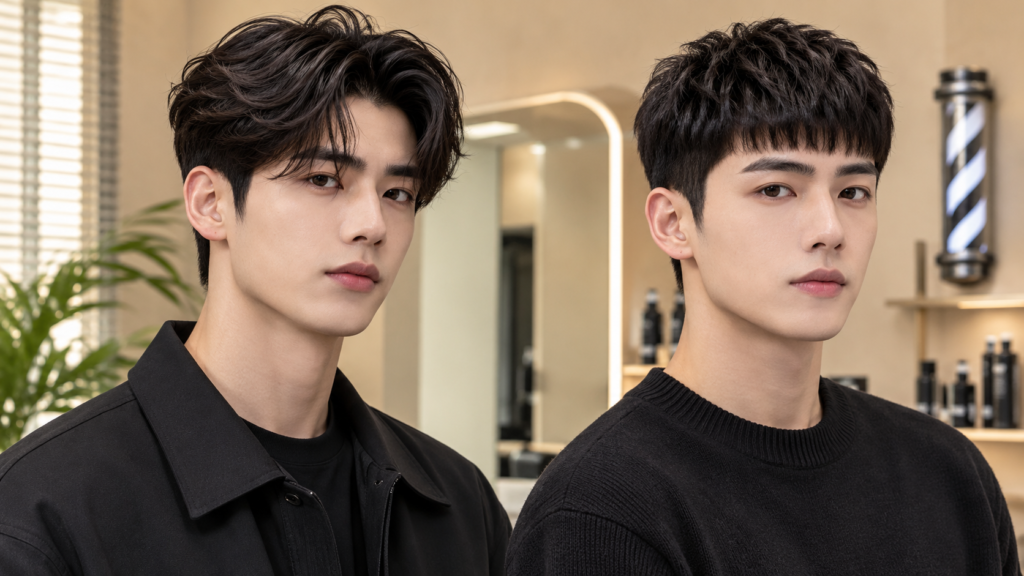
The Korean textured crop is a short haircut that uses choppy layers and faded sides to create natural movement. Point-cut layers add dimension without making the hair look too heavy or overly styled. Men with thick, straight hair can use a small amount of matte clay to separate the strands and create lift around the crown. Fine hair can benefit from texture powder applied directly to the roots before styling. This haircut also adds visual width without requiring extra length, making it useful for different face shapes. Its simple styling routine makes it a convenient choice, with maintenance trims usually needed every three weeks. This is one of the Korean Hairstyles for Men featured in this guide.
4. Korean French Crop
The Korean French crop features a short top, lightly layered texture, faded sides, and a blunt fringe positioned above the eyebrows. Its horizontal front section can make an oblong or long face appear shorter by reducing the visible forehead length. One reason men choose this haircut is its simple maintenance routine. It usually requires little styling, product, or blow-drying, making it suitable for busy mornings. Straight hair of almost any density can work with this style, although men with wider faces should consider another fringe shape because the horizontal line may add visual width. A trim every three weeks keeps the haircut looking clean. This is one of the Korean Hairstyles for Men featured in this guide.
5. Korean Buzz Cut
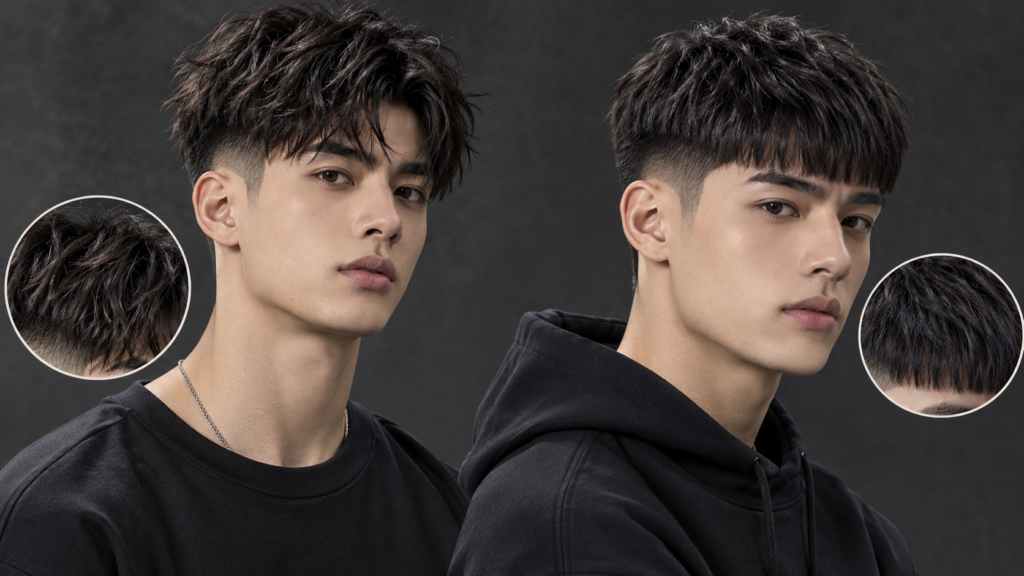
The Korean buzz cut offers a simple appearance with an even clipper length and carefully finished edges. Although it is not always considered a traditional Korean salon hairstyle, it has become popular in Seoul street fashion. Men can choose a number 2 or 3 guard across the head and add a subtle taper or skin fade around the sides. This cut works best when the natural bone structure complements a very short hairstyle because it exposes the entire head shape. Clean grooming and well-chosen clothing help complete the look. It suits several hair textures and needs a trim approximately every two weeks. This is one of the Korean Hairstyles for Men featured in this guide.
6. Korean Drop Fade
The Korean drop fade stands out because its fade follows a curved line behind the ear instead of a straight horizontal path. This arc creates a smoother transition around the back of the head and works well with a voluminous, layered top. The contrast between the curved sides and textured hair gives the haircut a modern, balanced appearance. It can also soften angular jawlines while maintaining proportion through added volume above. Straight, thick hair is particularly suitable for this style. This is one of the Korean Hairstyles for Men featured in this guide. However, the curved fade can lose its shape quickly as the hair grows, so a touch-up every two to three weeks is helpful.
7. Korean Taper Fade
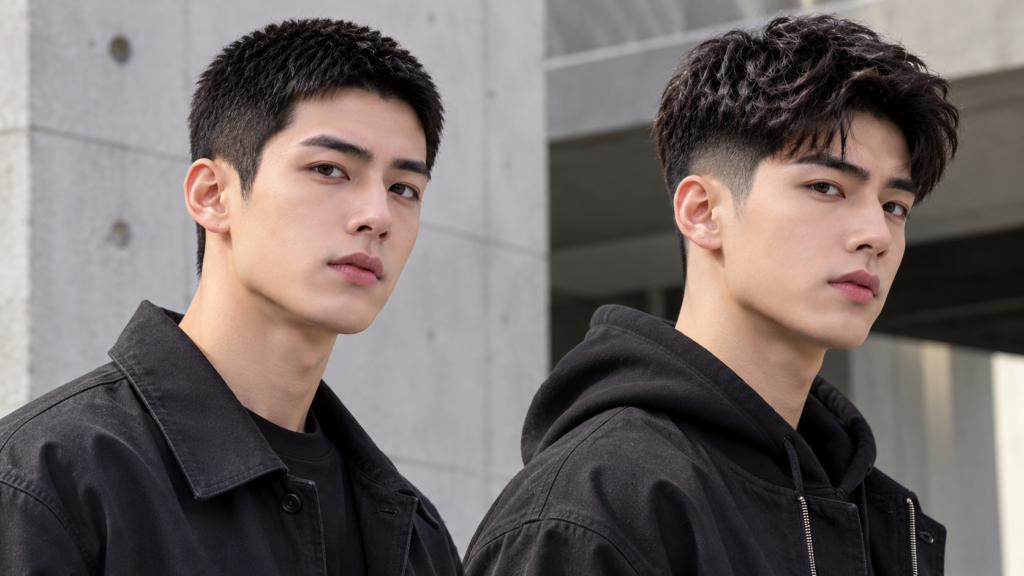
The Korean taper fade is a subtle option for men who want shorter sides without exposing too much skin. Hair gradually becomes shorter around the ears and neckline, creating a soft transition instead of the sharp appearance of a Western skin fade. This gentle finish is common in K-drama hairstyles because it looks natural and works in professional settings. It also suits almost every face shape, hair texture, and density. Ask your barber for a natural taper that blends into the sideburns without creating a hard line. The haircut is easy to maintain, with a fresh shape usually lasting three to four weeks. This is one of the Korean Hairstyles for Men featured in this guide.
8. Korean Ivy League Haircut
The Korean Ivy League combines classic barbering with modern texture, creating a neat hairstyle for professional and everyday settings. It features short tapered sides and enough length on top to create a natural side part. The overall appearance sits between a traditional gentleman’s haircut and a Two Block, making it a useful choice for men who prefer a refined look. The side part adds asymmetry, which can balance stronger facial features. A small amount of light pomade helps maintain the direction without making the hair stiff or overly shiny. Straight, medium, and thick hair can suit this style with regular trims. This is one of the Korean Hairstyles for Men featured in this guide.
9. Short Textured Korean Hairstyle
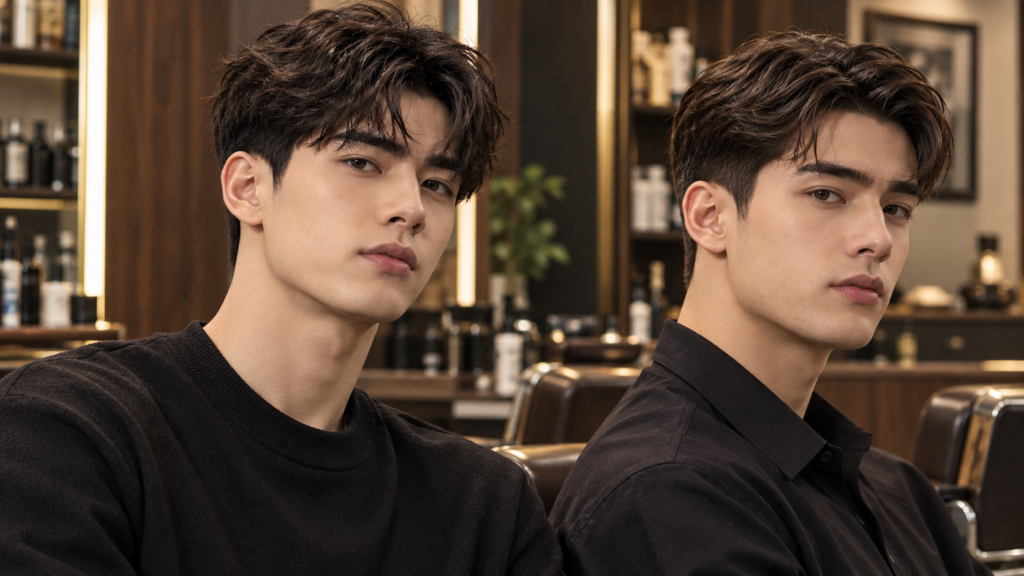
The short textured Korean hairstyle features a choppy top, clean tapered sides, and no clearly defined fringe. Its slightly undone appearance creates a relaxed look without requiring complicated styling. Men with thick, straight Asian hair can benefit from its natural density, which provides texture without much product. However, fine hair may lose volume and appear flat, so applying texture powder to the roots can help. The top remains relatively short and avoids creating excessive height, making the haircut suitable for men who prefer simple grooming. A trim approximately every three weeks keeps the sides and overall shape looking fresh.
10. Korean Comma Hair
Comma hair is a distinctive Korean hairstyle known for its inward-curving fringe that resembles a comma near the temple. The curved section frames the forehead and creates soft movement around the face. Barbers usually leave four to five inches on top to provide enough length for shaping. The signature curve can be created with a garma perm or by wrapping the fringe around a round brush while blow-drying with medium heat. Straight Asian hair often needs this additional styling to hold its shape throughout the day. The hairstyle works well with round and square faces, while a disconnected or soft taper keeps the sides balanced.
11. Korean Curtain Haircut
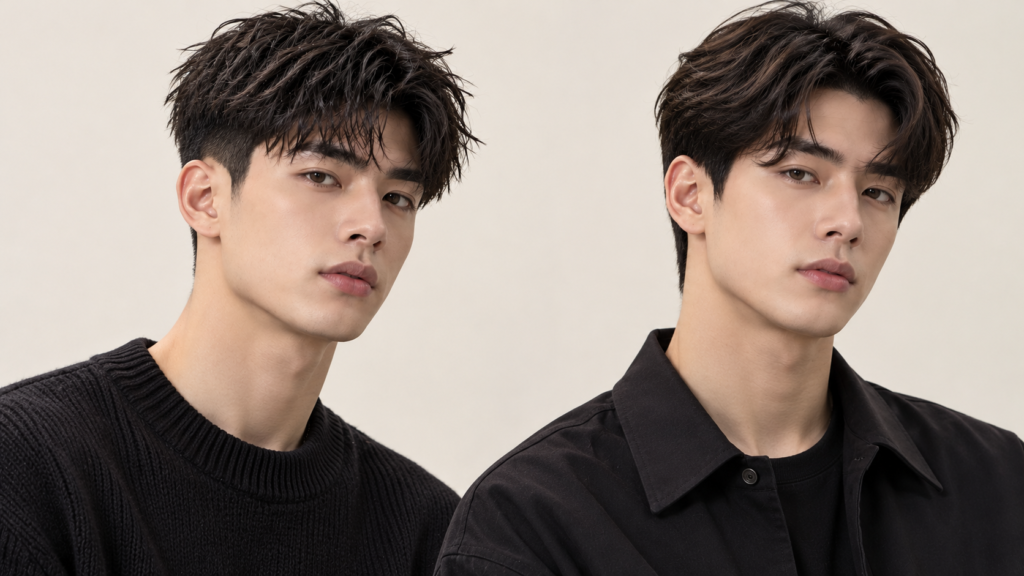
The Korean curtain haircut features a center part with longer sections falling outward around the face. Unlike the straight, heavy appearance of some Western 1990s curtain hairstyles, the Korean version uses soft layers and gently flipped ends. These face-framing sections fall around the cheekbones and help soften angular jawlines. A round brush can direct each side away from the center while blow-drying the ends. Men with straight or slightly wavy hair can achieve this look with medium to thick density. A soft taper or Asian comb-over fade can add contrast around the sides. Regular trims every four to five weeks help maintain the flowing shape.
12. Korean Middle Part
The Korean middle part creates a balanced hairstyle with a center division and naturally falling sides. Although it looks similar to a curtain haircut, it usually sits closer to the head and has less outward movement. The length is also more uniform, with fewer layers throughout the hair. This simple arrangement highlights symmetrical facial features and creates a relaxed appearance. Men with oval or diamond faces can wear it particularly well. If your face is wide, adding some lift at the roots can prevent the sides from looking too flat. Straight hair with medium density works well, and maintenance trims are usually needed every four to five weeks.
13. Korean Side Part
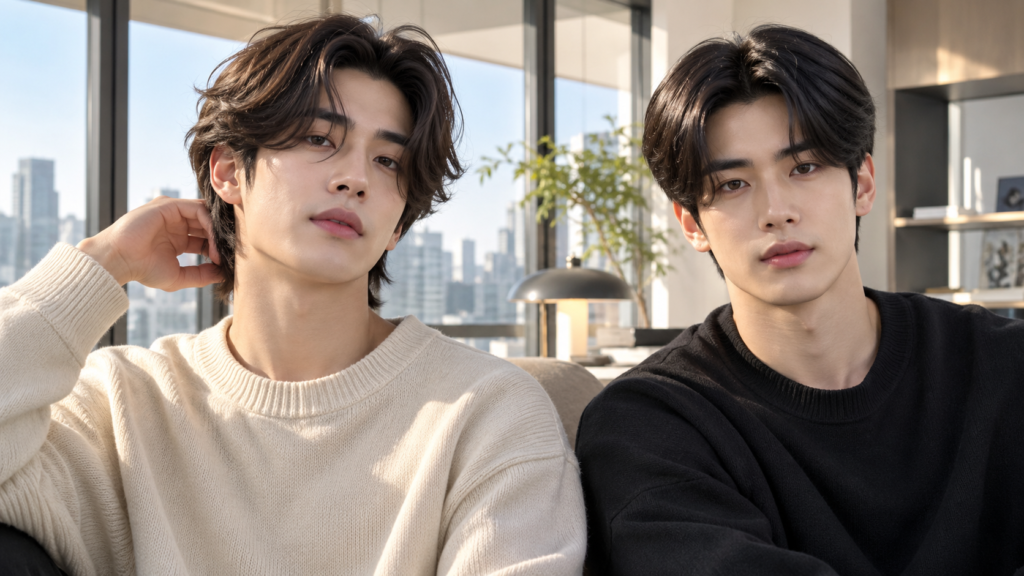
The Korean side part offers a timeless masculine appearance with a natural division, longer top, and clean tapered sides. Unlike a Western hard part, this version does not require a shaved razor line. Instead, the separation forms naturally while blow-drying the hair in the desired direction. A small amount of light pomade can hold the shape without creating excessive shine. The side-swept top adds asymmetry, which can help balance facial proportions and make narrow faces appear wider. For a polished finish, comb the hair to one side while drying it, then apply matte styling cream. Straight hair of different densities can suit this haircut.
14. Korean Dandy Cut
The Korean Dandy cut is a softer alternative to the traditional Two Block, with gentle layering and a longer side-swept fringe. Its top and sides blend more naturally, creating less noticeable disconnection than a standard Two Block. The added fringe brings width around the face without creating excessive height, making it suitable for oval, oblong, and heart-shaped faces. This hairstyle also works well in professional environments because its overall appearance is neat without looking too formal. Straight hair with medium to thick density can hold the shape comfortably. A trim every four weeks helps preserve the layers and maintain its refined appearance.
15. Korean See-Through Bangs
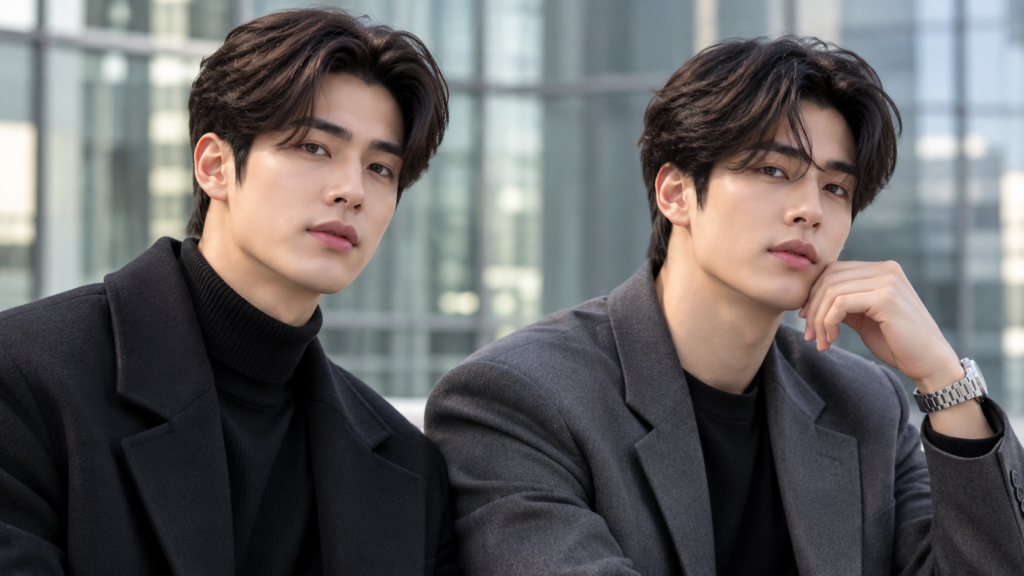
Korean see-through bangs feature a light, wispy fringe that allows parts of the forehead to remain visible. The hair is deliberately thinned with texturizing shears so that individual strands fall softly instead of forming a heavy, flat line. This creates an airy appearance while gently framing the face. The style works well for men who want forehead coverage without hiding the entire forehead. However, the fringe can become oily because it rests directly against the skin and absorbs forehead oil throughout the day. Washing the front section daily and avoiding styling products on the bangs can help maintain a fresh appearance between regular trims.
16. Korean Textured Fringe
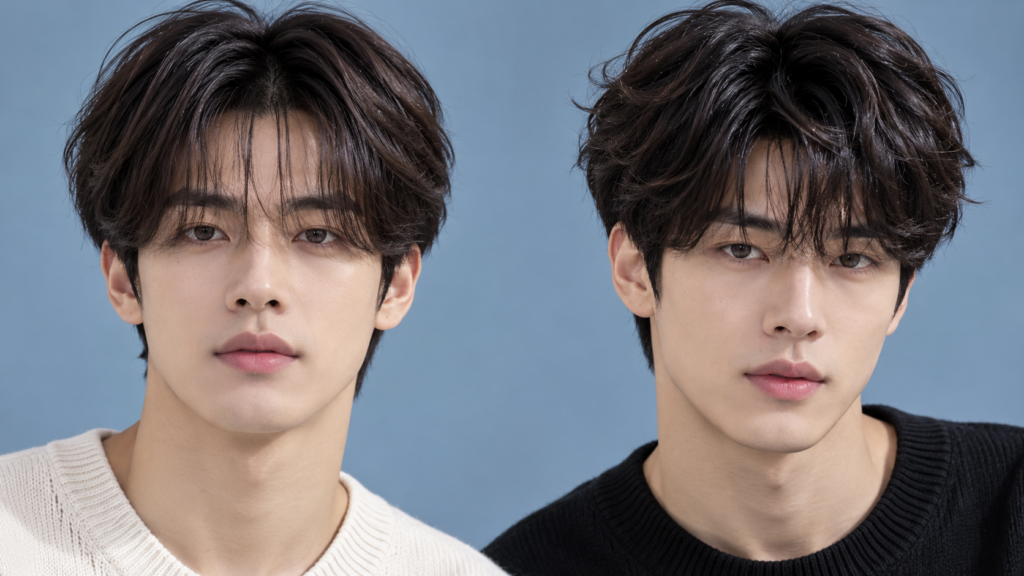
The Korean textured fringe uses separated strands to create a piecey appearance across the forehead. It contains more hair than see-through bangs, but deliberate gaps between the strands give it a lighter and more defined finish. Texture powder applied to the roots helps create lift and separation before arranging the fringe. The vertical direction of the strands can also make the face appear longer, which is useful for men with round facial features. Straight hair with medium to thick density works well with this haircut. Its layered top provides natural movement, while regular trims every three to four weeks keep the fringe from becoming too heavy.
17. Korean S-Shaped Fringe
The Korean S-shaped fringe creates a flowing wave across the forehead with two changes in direction. Unlike comma hair, which usually has one inward curve, this fringe forms a more noticeable S-shaped pattern. A perm or curling iron may be needed to create both curves, especially for men with naturally straight hair. The horizontal movement adds visual width across the forehead and creates an elegant finish. Because the wave pattern requires careful styling, showing your barber a reference picture can help achieve the desired result. This hairstyle suits oval and oblong faces, but daily heat styling or regular perm maintenance may be necessary.
18. Korean Side Swept Fringe
The Korean side-swept fringe features a longer front section that moves diagonally across the forehead toward one eye. Its natural direction creates asymmetry, helping the face appear slimmer and slightly longer. Soft layers around the front keep the hairstyle from looking too heavy, while clean tapered sides maintain a modern appearance. This is one of the easier Korean fringe styles to manage because gravity helps the hair fall naturally into position. Simply blow-dry the fringe in the direction you want it to move and allow it to settle. Straight hair can hold this shape without a perm, and regular four-week trims maintain its length.
19. Korean Side Bangs
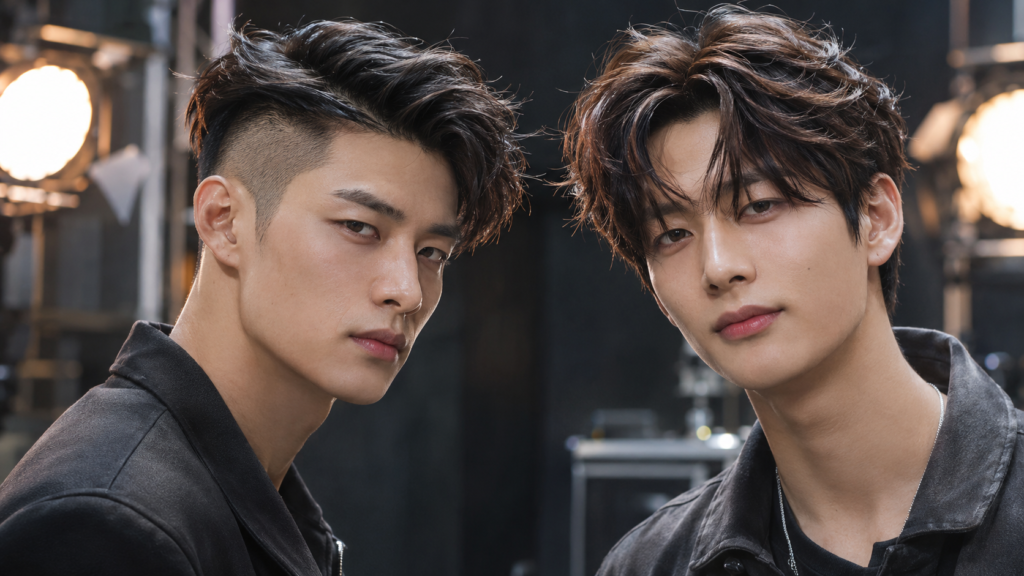
Korean side bangs feature a medium-length fringe swept gently toward one side of the forehead. They are shorter than a full side-swept fringe, usually resting above the eyebrow instead of falling toward the eye. This creates a lighter appearance while covering part of the forehead and helping the face look slimmer. Men with round, square, or heart-shaped faces can consider this hairstyle because the angled fringe softens facial proportions. A small amount of light wax helps hold the hair in its natural direction without making it stiff. Straight hair with medium density works well, and regular trims keep the fringe controlled.
20. Korean Down Perm
The Korean down perm is a flattening treatment designed for men whose thick or coarse side hair sticks outward. Unlike a curling perm, it uses a special perming serum to restructure keratin bonds and make bulky hair sit closer to the head. This creates a sleeker profile and reduces unwanted puffiness around the sides. It can also make a wide face appear narrower by keeping the side sections flat. Men with stiff, thick hair often benefit most from this treatment. The result requires little daily styling, although the treatment gradually fades. Repeating the down perm every two to three months helps maintain its shape.
21. Korean Messy Hair
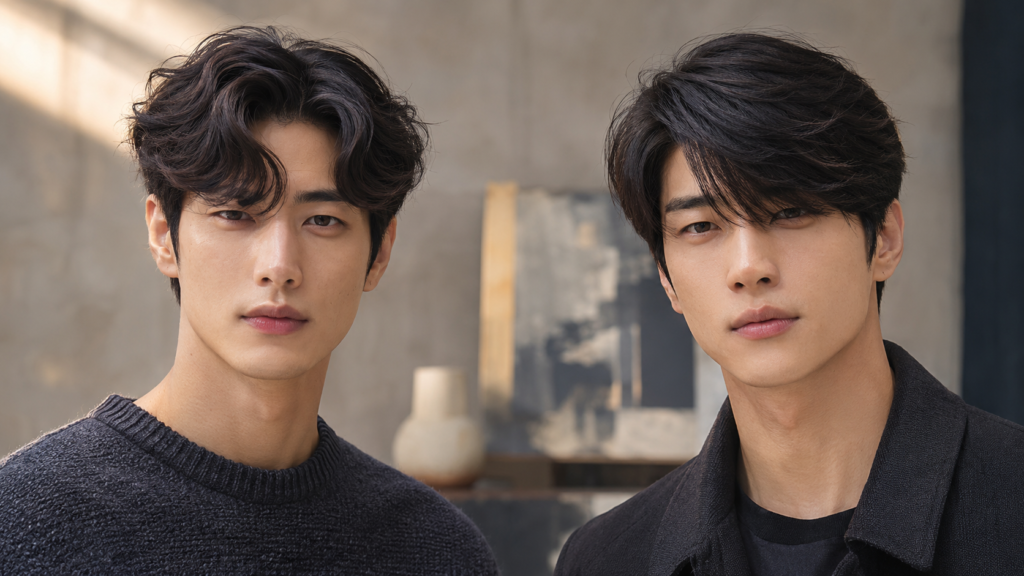
Korean messy hair features tousled medium-length layers without a clearly defined part or styling direction. The aim is to create natural texture rather than a carefully arranged finish. One common mistake is applying too much product, which can make the hairstyle look heavy and artificial. A pea-sized amount of light clay is usually enough when scrunched through towel-dried hair before air-drying. The random movement adds width and can help fill out narrower facial features. Straight to wavy hair with medium or thick density works particularly well. This relaxed hairstyle needs relatively little daily attention, with maintenance trims every four to five weeks.
22. Modern Korean Bowl Cut
The modern Korean bowl cut gives the traditional rounded shape a softer and more textured appearance. Instead of a flat helmet-like finish, the 2026 version uses internal layering to create depth and natural movement. The fringe follows a rounded line, while the sides are tapered or undercut rather than cut bluntly. Point cutting through the interior layers helps prevent the hair from sitting flat and creates softer ends. This hairstyle can visually shorten longer faces and works particularly well with straight, thick hair. Fine hair may need extra volume to maintain the shape. Regular trims every three to four weeks preserve its rounded silhouette.
23. Korean Undercut
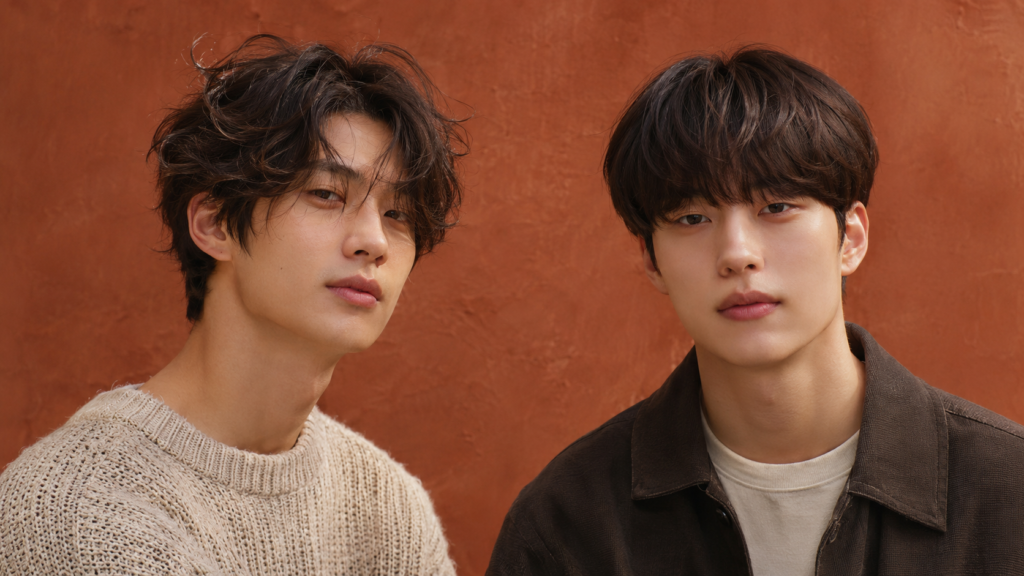
The Korean undercut creates a noticeable contrast between closely shaved or faded sides and a longer top. It is more disconnected than a standard Two Block and works as a foundation for several styling options. You can push the top backward, create a side part, direct it forward, or add texture for a relaxed finish. The shorter sides make the longer top stand out and can visually lengthen the face. Men with straight, medium, or thick hair can experiment with different top styles. Because the sides grow quickly and affect the contrast, a barber visit every two to three weeks helps maintain the haircut.
24. Modern K-Pop Hairstyle
The modern K-Pop hairstyle is a styling approach inspired by Korean idols rather than one specific haircut. It usually starts with a Two Block or layered cut, followed by blow-drying to create noticeable lift at the roots. A round brush helps direct the hair upward, while matte clay or molding paste adds definition to the fringe and holds the volume. Some K-pop idols also use hair color to create additional visual dimension. For home styling, focus on lifting the roots before arranging the front section. This look suits several hair densities, although thick hair generally holds the volume longer and needs regular styling.
25. Korean Wolf Cut
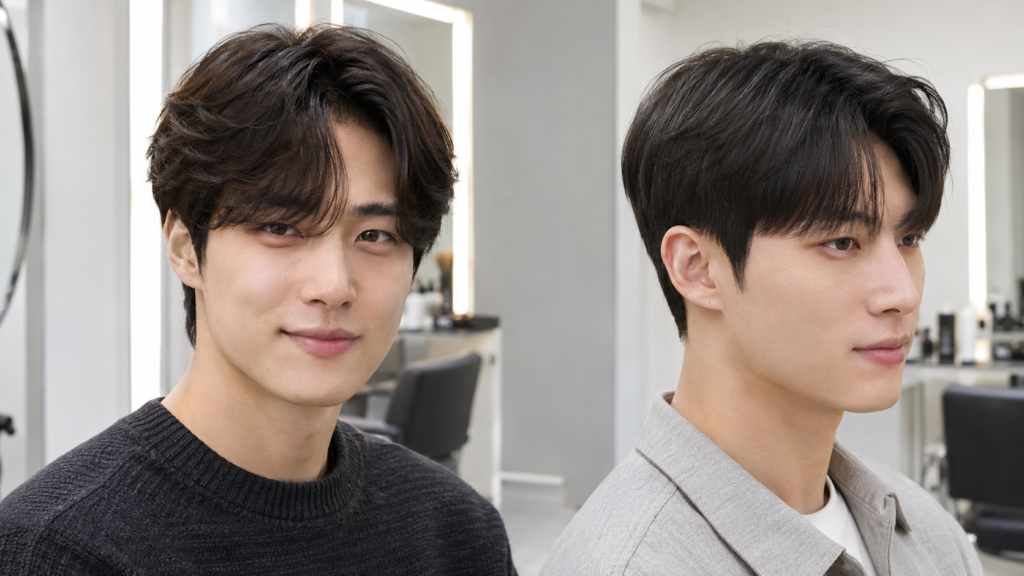
The Korean wolf cut combines soft choppy layers with shorter hair around the crown and longer sections near the sides and nape. Compared with the Western wolf cut, its shape is gentler and focuses more on flowing layers than a strong mullet appearance. The front sections frame the face, while the longer back adds movement and dimension. Use your fingers instead of a brush while blow-drying because brushing can remove the natural separation between the layers. This haircut works with straight or wavy hair and different densities. Thick straight hair benefits from the layers because they reduce heaviness and create more natural movement.
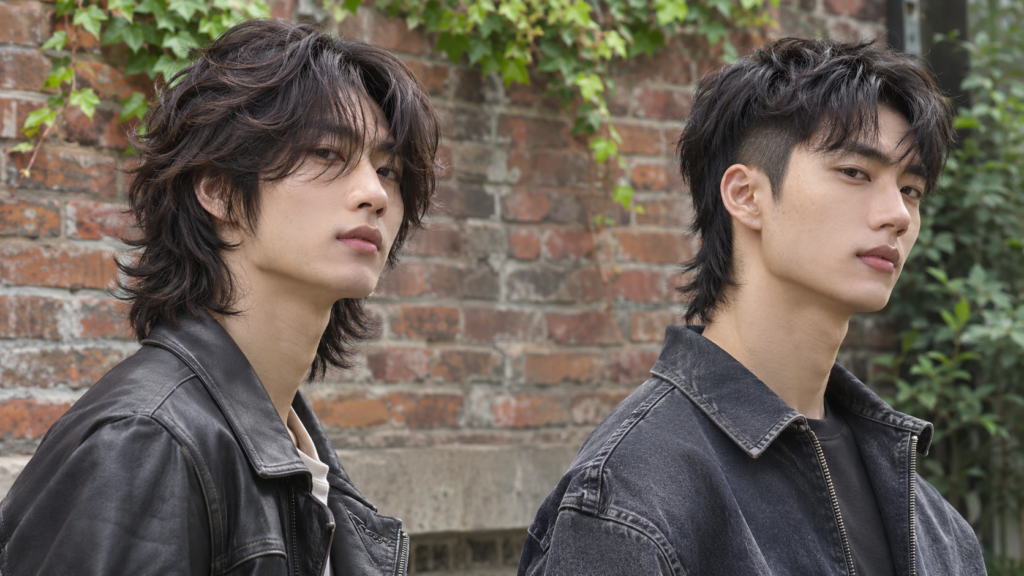
26. Korean Mullet
The Korean mullet combines a short textured top, tight sides, and a longer back for a modern statement hairstyle. It often follows the Two Block approach, keeping the front and sides controlled while allowing the back to grow. The back section should be feathered and layered instead of bluntly cut, which helps prevent unwanted bulk around the nape. Keeping the front short enough maintains facial proportion, while the extended back adds personality. For a first haircut, ask your barber to keep the back above the collar line. This gives you room to grow it longer later. Straight, medium, and thick hair work well with this style.
27. Korean Shaggy Cut
The Korean shaggy cut features uneven, tousled layers that create a relaxed appearance with deliberate imperfections. It sits between a traditional layered cut and a more dramatic wolf cut, offering texture without an overly strong shape. Naturally wavy or thick hair works especially well because its existing texture provides built-in movement. Thin, straight hair may look limp unless additional volume is created through styling. Sea salt spray can help build a tousled body and separate the layers without making them appear too polished. The random arrangement also softens angular facial features. Regular trims every five to six weeks help preserve the hairstyle’s shape.
28. Korean Layered Cut
The Korean layered cut uses soft scissor work to create flowing sections from the crown toward the ends. It is particularly useful for men with thick hair because carefully placed layers remove extra weight without sacrificing overall length. Point cutting at the ends creates softer tips and prevents the blunt appearance that traditional scissors can produce. The graduated lengths add vertical movement and help elongate the overall frame. A soft taper around the sides can make the hairstyle look more polished while keeping its natural flow. This haircut suits round and oval faces, especially when the hair is straight and thick. Trims every five to six weeks maintain the layers.
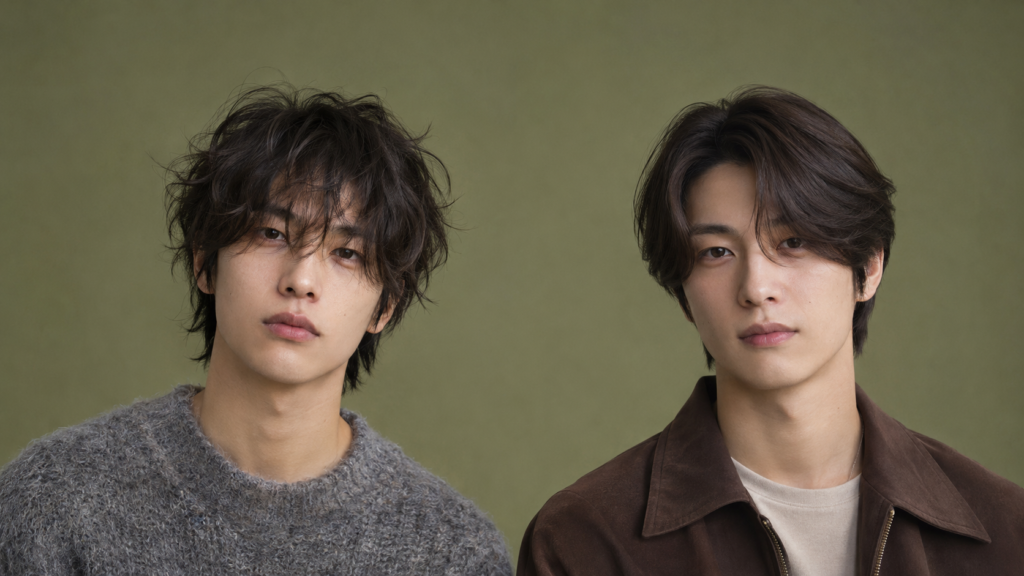
29. Korean Flow Cut
The Korean flow cut features longer face-framing layers that fall naturally around the cheekbones and jawline. Its flowing shape creates movement without removing too much length, while a slightly longer nape gives the back additional fullness. Men generally need at least five to six inches of hair on top to achieve the intended drape. During styling, use medium heat and direct the layers outward rather than straight downward. This helps the hair maintain its natural shape and prevents the front from looking too flat. Straight or wavy hair with medium to thick density works well. Maintenance trims every five to six weeks keep the flowing sections balanced.
30. Korean Long Bangs
Korean long bangs feature an extended fringe that reaches below the eyes and frames the face from the forehead toward the cheekbones. The longer vertical sections create a dramatic K-drama-inspired appearance and can make the face look slimmer. This hairstyle is especially noticeable because the fringe becomes a major part of the overall look. However, the length can affect peripheral vision during everyday activities. Men who drive, play sports, or need clear sight lines for work may find the hair inconvenient. It works best in creative or casual settings where the fringe can be moved aside when necessary. Regular trims every five to six weeks control its length.
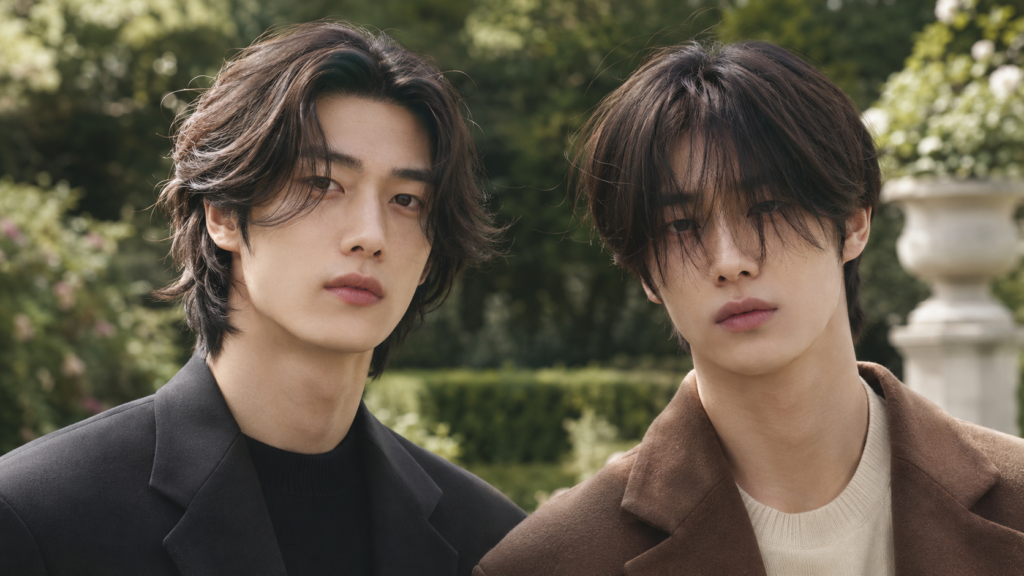
31. Korean Bangs with Ponytail
The Korean bangs with ponytail hairstyle combines a soft front fringe with medium-length hair tied into a low ponytail. It creates balanced proportions by keeping the forehead partly covered while pulling the remaining hair away from the face. You generally need six to seven inches of hair at the back to tie it comfortably. Use a fabric hair tie instead of a rubber band because rubber can catch Asian hair and cause breakage over time. Styling is simple: shape the fringe with a blow-dryer, gather the remaining hair, and secure it at the back. Occasional fringe trims help maintain its appearance.
32. Korean Slicked Back Hairstyle
The Korean slicked back hairstyle features hair brushed backward from the forehead with controlled volume around the crown. Unlike a traditional Western pompadour, this version has a looser finish that looks more natural and less structured. Work a small amount of light wax through damp hair before blow-drying it backward with a round brush. The aim is to create direction without making the hair look stiff or covered in gel. Because the forehead remains completely visible, balanced facial proportions can make this style particularly attractive. Straight, thick hair usually holds the shape better, while fine hair may need stronger styling support.
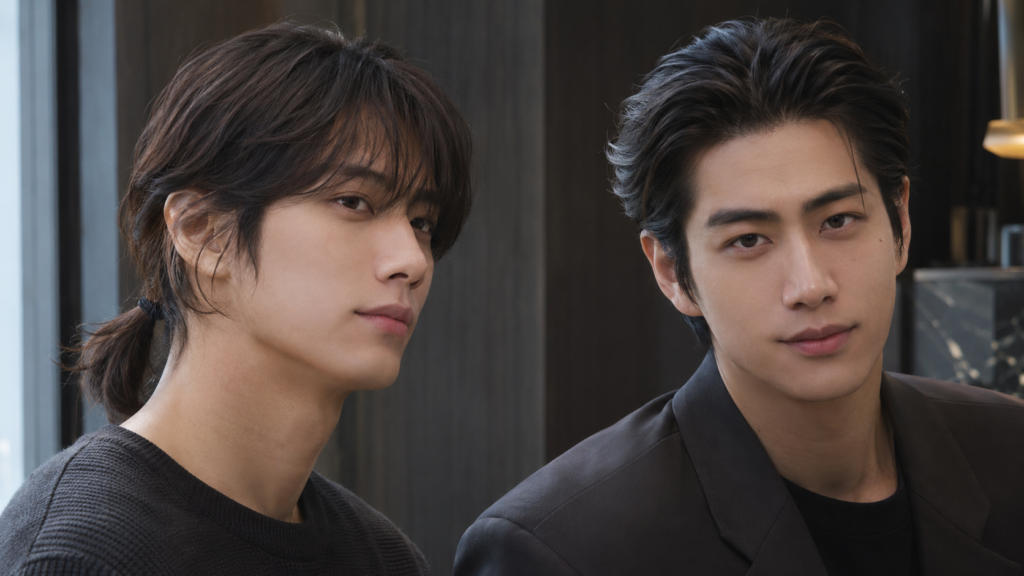
33. Korean Wavy Perm
The Korean wavy perm adds soft curls, bounce, and dimension to naturally straight hair. It is a popular salon treatment for men who want fuller-looking hair with more movement and texture. The waves create layered volume and gently frame the face, making the hairstyle look less flat. This added movement can also soften strong jawlines and balance longer facial proportions. Men with naturally straight, dense hair often benefit from the treatment because it changes the overall texture without requiring a different haircut. The curl pattern gradually relaxes, so a new perm may be needed every three to four months. Natural waves may not require additional perming.
34. Korean Shadow Perm
The Korean shadow perm creates a dramatic fringe with lifted, curled sections that add noticeable volume around the forehead. It generally needs at least five inches of hair on top so the front sections have enough length and weight to form the shadow effect. This is one of the bolder Korean perm options, making it suitable for men who enjoy a more noticeable hairstyle rather than a conservative office look. The fuller top can add width around the forehead and soften the lower face. Thick, straight hair usually supports the style better than fine strands. Regular blow-drying and a perm refresh every three months help maintain its shape.
35. Korean Leaf Perm
The Korean leaf perm is a modern salon hairstyle that creates soft outward and inward waves inspired by the natural curve of a leaf. Its wave pattern looks more organic and less uniform than a standard perm, giving medium and longer hairstyles additional movement. The flowing sections strengthen the face-framing effect while adding width around the upper face without creating excessive height. Four to five inches of top length usually provide enough room for the waves to develop naturally. Straight hair with medium or thick density works well with this treatment. The curl pattern gradually relaxes, so a new perm every two to three months can maintain the result.
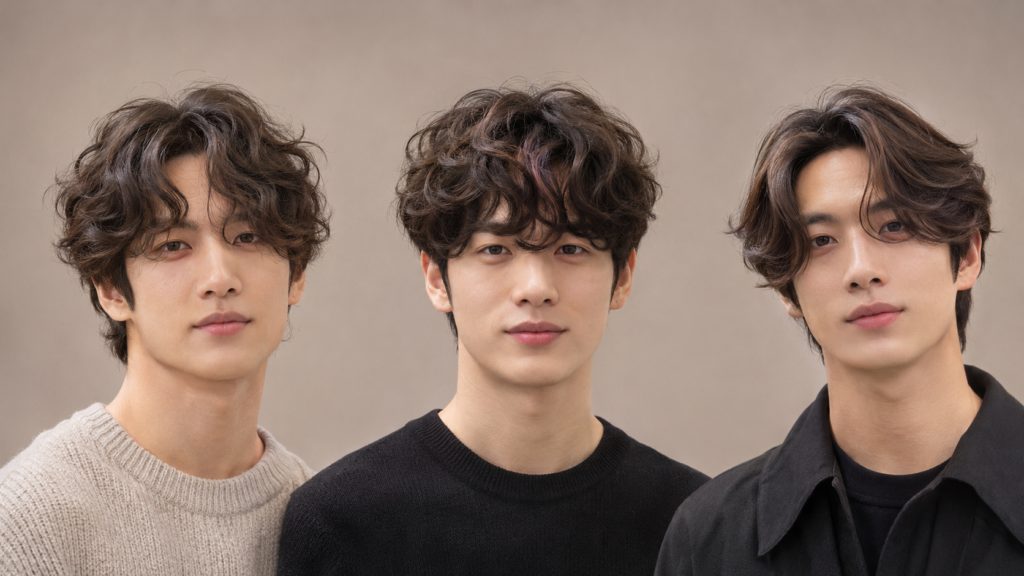
Which Korean Hairstyles Suit Short, Medium, and Long Hair?
Short Korean hairstyles suit hair under 3 inches. Options include Two Block, Caesar, Textured Crop, French Crop, Buzz Cut, Drop Fade, Taper Fade, Ivy League, and Short Textured. Medium hairstyles suit 3 to 5 inches. These include Comma Hair, Curtain, Middle Part, Side Part, Dandy Cut, See-Through Bangs, Textured Fringe, S-Shaped Fringe, Side Swept Fringe, Side Bangs, Down Perm, Messy Hair, Bowl Cut, Korean Undercut, and KPop Style. Long hairstyles suit 5 inches or more. Styles include Wolf Cut, Korean Mullet, Shaggy Cut, Layered Cut, Flow Cut, Long Bangs, Bangs with Ponytail, Slicked Back, Korean Perm, Shadow Perm, and Leaf Perm. K-pop idols pair these cuts with ash brown, dark blonde, or platinum highlights. Color adds dimension to black hair and shows layers. If you plan to bleach your hair, do it after the cut as bleaching changes texture. The barber should cut its final texture for your preferred look.
How Should You Ask Your Barber for a Korean Haircut?
Getting the right Korean haircut starts before the clippers turn on. Bring a photo and explain the technical details before cutting begins. Terms such as Two Block, Comma Hair, and Dandy Cut may not be understood outside Seoul. For a Two Block, ask for a disconnected undercut with 3 to 4 inches on top, directed forward. Say that you want the weight line hidden, not blended, because the style depends on contrast between the blocks. Explain where the fringe should end, such as mid-forehead, and whether it should fall forward, move sideways, or part in the center. Mention if you need a perm to hold a curl. For the sides, request a soft taper or specify a number 3 guard at the sideburns with no skin showing. For a Seoul street look, ask for a low fade, not a mid or high fade. Also describe how you style it daily.
How Can You Style Korean Hairstyles?
Blow-drying is the foundation of Korean men’s hairstyles as technique creates volume, direction, and shape. Direct airflow upward at the roots for lift, and use a round brush to guide the fringe. Choose medium heat instead of high heat, which can damage hair and cause frizz. Match the product to the haircut. Use matte clay or texture powder for short cuts for grip and separation without shine. For medium styles such as Comma Hair and Curtains, choose light styling cream or soft wax for hold without stiffness. Sea salt spray suits long or wavy styles for body and movement without weight. Avoid heavy gels because they create a wet, rigid finish that conflicts with the natural texture of Korean cuts. Shape the fringe: a comma curve, Caesar line, or see-through wisps after the rest of the hair is dry. Spend 30 seconds shaping it with a brush or fingers.
How Can You Maintain a Korean Hairstyle?
Regular trim frequency depends on the style. Short styles such as Two Block, Caesar, and fade-based cuts need trimming every 2 to 3 weeks as short sides lose definition. Medium styles such as Comma Hair, Curtains, and Dandy Cut hold shape for 4 to 5 weeks. Long styles such as Wolf Cut, Flow, and Layered Cut can go 5 to 6 weeks between cuts. Perm-based styles need shape trims every 5 to 6 weeks and a re-perm every 2 to 4 months, depending on type. Fringe styles, including See-through Bangs, textured fringe, and Comma Hair, need daily washing as forehead oil causes clumping. Wash the fringe daily, even if your full head is washed every 2 to 3 days. After a Korean perm, wait 48 hours before washing. Use hydrating conditioner, finger-comb instead of brushing, avoid tight headbands and hats, and apply curl-enhancing cream to damp hair after each wash.
FAQ
Is It Possible to Get a Korean Haircut at a Regular Western Barbershop?
Yes. Most Western barbers are familiar with fades and tapers, although names such as Two Block and Dandy Cut may be unfamiliar to them. Instead of relying on the haircut name, describe exactly what you want using familiar barbering terms. For example, asking for a disconnected undercut with 4 inches on top and no blending at the weight line explains the Two Block style clearly.
Can Getting a Korean Perm Cause Hair Damage?
Korean perms generally use gentler solutions than Western perms and focus on selected hair sections instead of treating the whole head. The biggest issue after getting a perm is usually dryness. You can manage this by choosing sulfate-free shampoo and using a deep conditioner once a week. However, avoid getting a perm if your hair has already been bleached.
How Many Months Are Needed to Grow a Korean Hairstyle?
When growing your hair from a buzz cut, popular Korean styles requested by male clients, including Comma Hair and Curtains, usually require 4 to 6 months. The most difficult growing period often occurs between the second and third months. During this stage, the sides may become puffy while the top remains too short for styling. A down perm can help control the sides and keep them flat as the top grows longer.
Are Korean Hairstyles Suitable for People With Non-Asian Hair Types?
Yes. These haircut structures can suit people of different ethnicities, although the styling methods may need some adjustments. Many short Korean-style cuts created by barbers depend on straight, thick hair to achieve their neat shape. Other textures may require a different approach. For fine hair, volumizing powder can help create lift at the roots. People with Afro-textured hair can also choose a Two Block base, allowing the top section to follow its natural curls instead of falling straight.
How Can I Keep My Korean Fringe From Losing Its Shape During the Day?
To prevent your fringe from becoming flat, apply texture powder directly to the roots before styling. It helps absorb oil before it builds up. Use medium heat when blow-drying your fringe, then finish with cold air to help maintain its shape. Keeping a small, travel-size dry shampoo with you can also help refresh your hair around midday.
How Is a Two Block Haircut Different From an Undercut?
The main difference is how the disconnected section appears. With a Two Block, the weight line between the short sides and longer top stays hidden beneath the upper hair layer, making the separation invisible when styled. An undercut leaves this difference exposed through a visible shaved section. A Two Block creates a more subtle and conservative appearance, whereas an undercut gives a stronger, bolder look. Both haircuts can be used as foundation styles and finished with a forward, parted, or textured look.
Stay Connected
Stay connected with Cyiana for more fashion inspiration, beauty ideas, skincare tips, makeup looks, and the latest trends. If you enjoyed this article, follow us on YouTube for helpful videos, TikTok for quick style and beauty inspiration, and Reddit for conversations and community discussions. You can also explore more fashion trends, outfit ideas, seasonal styling guides, beauty advice, and product reviews across Cyiana. Whether you are updating your wardrobe, discovering a new beauty routine, or simply looking for fresh inspiration, our social channels make it easy to keep up with new ideas and helpful content from Cyiana wherever you enjoy browsing.